Area Unit Converter – Check All 296 Units
1 acre is about 0.4047 ha, or 43,560 ft², and 1 hectare is about 2.471 acres. Type a number in the Convert from field and pick its unit from the list below it, then pick the unit you want below the Convert to field. You can convert any of the 296 units to any other: square feet and acres, square metres and hectares, square miles, roods and perches, US survey units, and old land measures from Europe, Latin America, Asia and the ancient world.
How do you convert units of area?
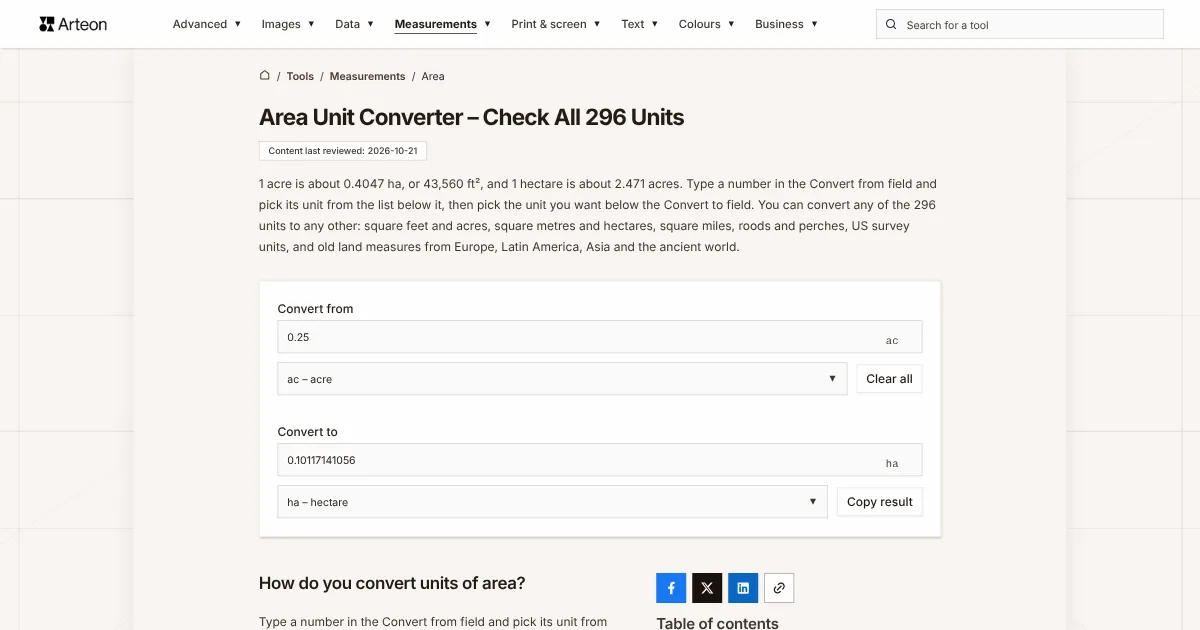
Type a number in the Convert from field and pick its unit from the list below the field, then pick the unit you want below the Convert to field. The converter starts with acres and hectares, and the result appears as you type. It also works the other way round: type a number in the Convert to field and the converter fills in the first one.
Both lists hold the same 296 units in 37 groups. The most used units come first, followed by imperial and US customary units, US survey and building units, metric units and old British and Irish land measures. After them come wire sizes, physics, old units from the rest of Europe and Latin America, Asian units, ancient and biblical units, and regional units still in use today.
You don't have to look for the unit in the list. Type it after the number, for example “1,500 sq ft”, “2.5 acres” or “10 ha”, and the converter sets the unit below the field and tells you which one it picked. The field reads both spellings, so “square metre” and “square meter” set the same unit. Land written in two units, such as “2 acres 1 rood”, turns into one value: here 2.25 acres.
Many land measures had a different size in each country or province. If you type just “1 morgen” or “1 arpent”, the converter picks the most common version and says below the field that the list has others. For old and regional units, a line below the fields also shows where and when the unit was used and its value in square metres. When the sources don't agree on one value, the line gives the value we calculate with and the range the sources give, and the result has only as many digits as the sources support.
The Copy result button copies the number from the Convert to field, and Clear all empties both fields.
How many hectares is an acre?
One acre is 0.40468564224 ha, or about 0.4047 ha, and one hectare is about 2.471 acres. To turn acres into hectares in your head, multiply by 0.4. To go from hectares to acres, multiply by about 2.5.
An acre is 43,560 ft², 4,840 yd² or 4,046.8564224 m². It is traditionally the area of one chain by one furlong, 66 by 660 feet, and in the Middle Ages it was thought of as the land one man could plough with a team of eight oxen in a day. An acre has no fixed shape, but as a square it would be about 208 feet 9 inches on each side[1].
A hectare is a square 100 metres on each side, 10,000 m². Its name joins “hecto”, a hundred, with the are, which the French defined as 100 m² when they introduced the metric system in 1795. The hectare is the land unit in the European Union, South Africa, New Zealand, Australia, Canada and the United Kingdom, while the United States measures land in acres[2].
In practice the two units live side by side. UK land registries have used hectares for new registrations for many years[3]. In Australia, homes and commercial property are advertised in square metres or hectares, but rural land is still sometimes reported in acres[4]. In Ireland the hectare is the legal unit, yet the statute acre is still widely used, especially in farming[1].
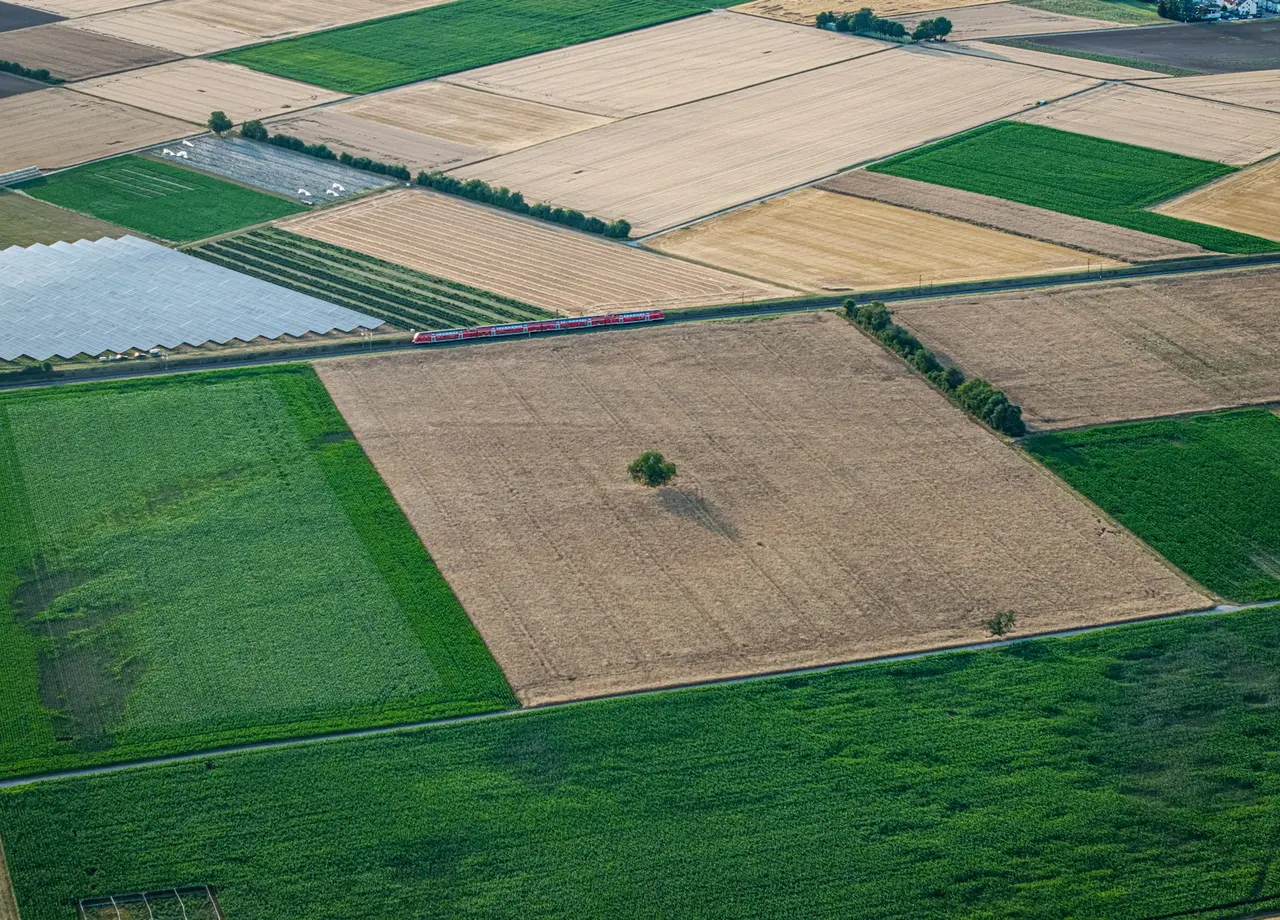
Sports fields help to picture these sizes. An American football field, end zones included, is 360 by 160 feet[5], which is 57,600 ft², or about 1.32 acres. FIFA recommends a soccer pitch of 105 by 68 metres[6]. That is 0.714 ha, or about 1.76 acres, so a hectare is a little larger than such a pitch.
How many hectares and square feet are common acreages?
| Acres | Hectares | Square metres | Square feet |
|---|---|---|---|
| 0.25 ac | 0.10117141056 ha | 1,011.7141056 m² | 10,890 ft² |
| 0.5 ac | 0.20234282112 ha | 2,023.4282112 m² | 21,780 ft² |
| 1 ac | 0.40468564224 ha | 4,046.8564224 m² | 43,560 ft² |
| 2 ac | 0.80937128448 ha | 8,093.7128448 m² | 87,120 ft² |
| 5 ac | 2.0234282112 ha | 20,234.282112 m² | 217,800 ft² |
| 10 ac | 4.0468564224 ha | 40,468.564224 m² | 435,600 ft² |
| 40 ac | 16.1874256896 ha | 161,874.256896 m² | 1,742,400 ft² |
| 160 ac | 64.7497027584 ha | 647,497.027584 m² | 6,969,600 ft² |
| 640 ac | 258.9988110336 ha | 2,589,988.110336 m² | 27,878,400 ft² |
How do you convert square feet to square metres?
Multiply square feet by 0.09290304 to get square metres. To go the other way, multiply square metres by about 10.7639. A room of 12 by 15 feet has 180 square feet of floor, which is about 16.72 m².
The factor comes from squaring a length. Since 1959 the foot has been exactly 0.3048 metres[7], so a square one foot on each side is 0.3048 × 0.3048 = 0.09290304 m². The same rule works for every unit of area: square the length factor. A yard is 3 feet, so a square yard is 3 × 3 = 9 ft². A kilometre is 1,000 metres, so a square kilometre is 1,000,000 m², or 100 ha. The SI rules say the same thing in their own way: in cm² the exponent applies to the whole centimetre, so 1 cm² is (0.01 m)², a ten-thousandth of a square metre[8]. Length factors themselves are in our length unit converter.
A square foot is the area of a square with 1-foot sides. In the United States and Canada it is the usual unit for the size of a home, an office or a room[9], and flooring, tiles and paint are often sold by how many square feet they cover. A square metre is the SI unit of area, the area of a square with 1-metre sides. UK and Australian floor plans and property listings give it as m² or sqm, and the field reads both.
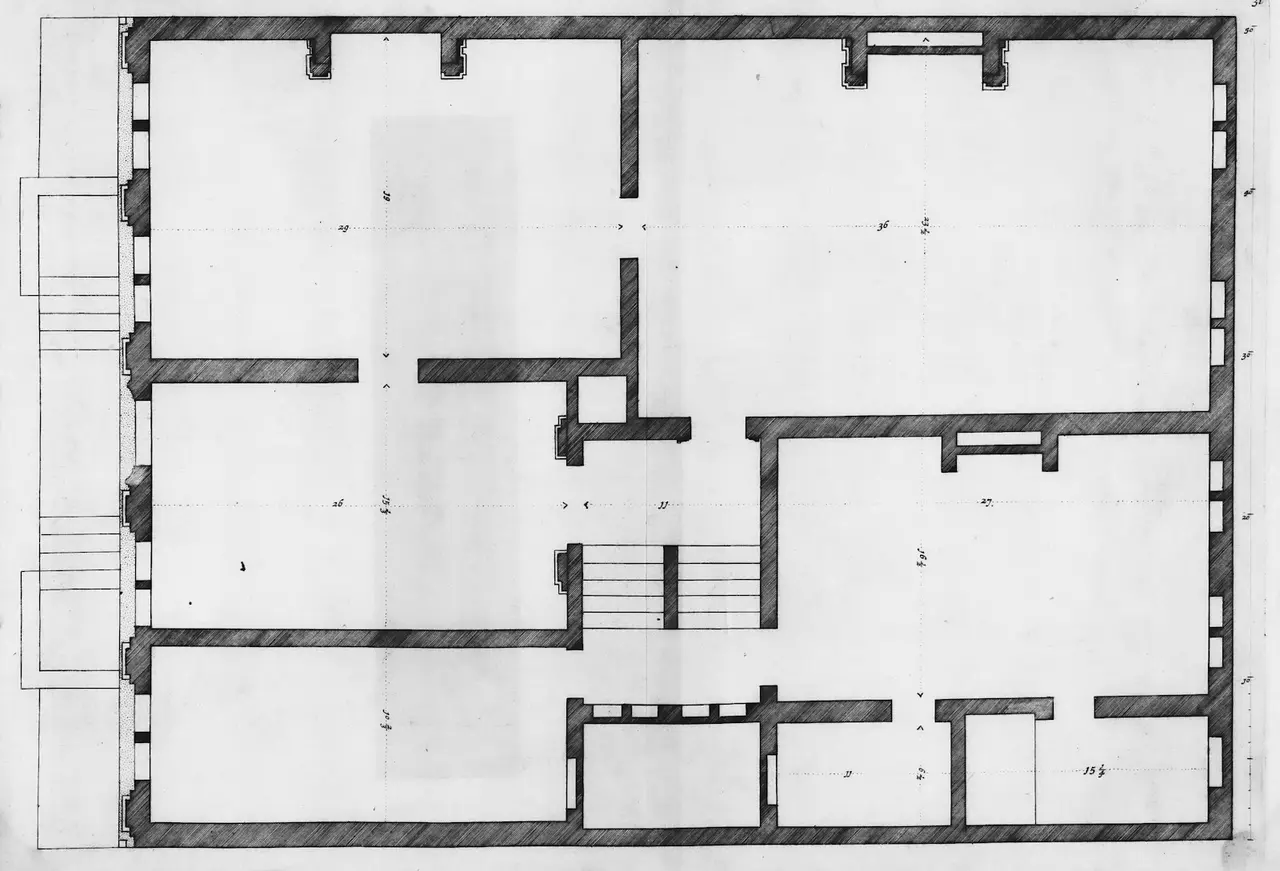
The converter works with areas, not sides, so multiply the length by the width first and type the result. When a room isn't a rectangle, split it into rectangles, work out each one and add them up.
How many square metres are common home sizes in square feet?
| Square feet | Square metres | Acres |
|---|---|---|
| 100 sq ft | 9.290304 m² | about 0.00229568 ac |
| 500 sq ft | 46.45152 m² | about 0.0114784 ac |
| 1,000 sq ft | 92.90304 m² | about 0.0229568 ac |
| 1,500 sq ft | 139.35456 m² | about 0.0344353 ac |
| 2,000 sq ft | 185.80608 m² | about 0.0459137 ac |
| 2,500 sq ft | 232.2576 m² | about 0.0573921 ac |
| 3,000 sq ft | 278.70912 m² | about 0.0688705 ac |
How big are the most used units of area?
| Unit | In square metres | In square feet | In acres |
|---|---|---|---|
| square foot (ft²) | about 0.092903 m² | 1 ft² | about 0.0000229568 ac |
| square metre (m²) | 1 m² | about 10.7639 ft² | about 0.000247105 ac |
| are (a) | 100 m² | about 1,076.39 ft² | about 0.0247105 ac |
| acre (ac) | about 4,046.86 m² | 43,560 ft² | 1 ac |
| hectare (ha) | 10,000 m² | about 107,639 ft² | about 2.47105 ac |
| square kilometre (km²) | 1,000,000 m² | about 10,763,900 ft² | about 247.105 ac |
What are roods, perches and square chains?
The imperial units of area are squares of the imperial units of length, and Britain's Weights and Measures Act 1985 lists them in one chain: a square foot is 144 square inches, a square yard is 9 square feet, a rood is 1,210 square yards, an acre is 4,840 square yards, and a square mile is 640 acres[10]. The US defines them the same way, and a square inch is exactly 6.4516 cm²[7].
The rod, also called the perch or the pole, is 16½ feet long[11]. A square rod is therefore 272¼ square feet, and 160 of them make an acre[12]. In land measures it is usually just called a perch. A rood is a quarter of an acre, 10,890 ft², or 40 perches, and in old documents it is sometimes written as “rod” with the same meaning[13]. Old British and Irish deeds give land in acres, roods and perches[13], and the Irish acre was likewise 160 square perches, only with a longer perch[14]. The field reads such entries: “2 acres 1 rood” gives 2.25 acres, and “3 roods 10 perches” gives 3.25 roods.
A square chain is 66 by 66 feet, a tenth of an acre, which made acres easy to count from a surveyor's chain[7]. The square furlong is 10 acres, and the square mile is 640 acres, about 2.59 km².
How big are the imperial and US customary units?
| Unit | In square metres | In square feet | In acres |
|---|---|---|---|
| square inch (in²) | 0.00064516 m² | about 0.00694444 ft² | 1.59422507907356 × 10⁻⁷ ac |
| square yard (yd²) | about 0.836127 m² | 9 ft² | about 0.000206612 ac |
| square rod (rd²) | about 25.2929 m² | 272.25 ft² | 0.00625 ac |
| square chain (ch²) | about 404.686 m² | 4,356 ft² | 0.1 ac |
| rood | about 1,011.71 m² | 10,890 ft² | 0.25 ac |
| square furlong (fur²) | about 40,468.6 m² | 435,600 ft² | 10 ac |
| square mile (mi²) | about 2,589,990 m² | 27,878,400 ft² | 640 ac |
How many acres are in a section and a township?
A section has 640 acres, one square mile, and a quarter section has 160 acres. These are the plots of the Public Land Survey System, which divides much of the United States into a grid. Thirty-six sections make up a survey township[15], a square nominally six miles on each side, or about 93.24 km²[16]. Under the Homestead Act of 1862 a settler could claim 160 acres, a quarter section, of public land[15]. Canada's Dominion Land Survey uses similar townships of about 36 square miles[16].
Real sections and townships are only nominally square. Handbook 44 marks their values as approximate[7], and the converter calculates with the definition: 640 acres for a section, 160 for a quarter section and 23,040 for a survey township.
For more than a century, US land surveys used a slightly different foot of exactly 1200/3937 metres, the US survey foot. NIST and NOAA have retired it: December 31, 2022 was its last day, and since January 1, 2023 the international foot of 0.3048 metres has replaced it[17]. The chain, the rod and the acre, which used to be defined only through the survey foot, now have a definition through the international foot as well[7]. A US survey acre is about 4,046.87261 m², bigger than the international acre by only about 0.016 m², roughly 25 square inches[1]. Old deeds and plats still give land in survey units, so the list keeps US survey square foot, US survey acre and US survey square mile.
In building, a roofing square is 100 square feet[7]. Roofing shingles, metal roofing and siding are sold by the square in the US and Canada[9]. Type “30 squares of roofing” and the converter sets this unit.
How big are the US survey and building units?
| Unit | In square metres | In acres | Where and when |
|---|---|---|---|
| US survey square foot | about 0.0929034 m² | about 0.0000229569 ac | USA, until the end of 2022 |
| roofing square | about 9.2903 m² | about 0.00229568 ac | US roofing and siding, 100 sq ft |
| US survey acre | about 4,046.87 m² | about 1 ac | USA, until the end of 2022 |
| quarter section | about 647,497 m² | 160 ac | US land survey, 160 acres |
| section | about 2,589,990 m² | 640 ac | US land survey, 640 acres |
| US survey square mile | about 2,590,000 m² | about 640.003 ac | USA, until the end of 2022 |
| survey township (twp) | about 93,239,600 m² | 23,040 ac | US land survey, 36 sections |
What are the metric units of area?
Every metric unit of area is a square metre with a prefix. Because the side is squared, each step on the length scale is a step of 100 on the area scale: 1 m² is 100 dm², 1 dm² is 100 cm², and 1 cm² is 100 mm². Square micrometres and square nanometres turn up in science and electronics.
For land, the metric system has the are and its multiples. A decare (daa) is 10 a, 1,000 m². The same 1,000 m² goes by local names. Greece and Cyprus call it the stremma[18], and in Israel, Palestine, Syria, Iraq and Turkey it is the metric dunam, adopted in Palestine in 1928[19]. Norway has the mål, which has meant 1,000 m² since the old mål of 10,000 Norwegian square feet was replaced[20].
How big are the metric units?
| Unit | In square metres | In square inches |
|---|---|---|
| square nanometre (nm²) | 1 × 10⁻¹⁸ m² | 1.5500031000062 × 10⁻¹⁵ in² |
| square micrometre (µm²) | 1 × 10⁻¹² m² | 1.5500031000062 × 10⁻⁹ in² |
| square millimetre (mm²) | 0.000001 m² | about 0.00155 in² |
| square centimetre (cm²) | 0.0001 m² | about 0.155 in² |
| square decimetre (dm²) | 0.01 m² | about 15.5 in² |
| decare (daa) | 1,000 m² | about 1,550,000 in² |
| stremma | 1,000 m² | about 1,550,000 in² |
| dunam | 1,000 m² | about 1,550,000 in² |
| mål | 1,000 m² | about 1,550,000 in² |
How big was a Scots acre or an Irish acre?
Before the imperial acre spread across the British Isles, Scotland and Ireland had their own. The Scots acre was standardised in 1661 and gave way to the imperial acre after the Weights and Measures Act 1824. Its size is given as 5,080 m², or as 54,760 square feet, about 1.257 acres[21], and these two figures don't quite agree, so the converter treats it as approximate. The Irish acre came from a perch of 7 yards and was in use from the plantations of the 16th century until the 19th century[14]. It is about 1.62 statute acres. The Cheshire acre was even larger, 10,240 square yards[1].
The hide was originally the land that could support a household, and it became a measure of value and tax. Domesday Book of 1086 records estates in hides, and a hide was usually four virgates. In some counties it is shown as 120 acres, 30 to the virgate, but those were fiscal acres, units of tax assessment, not of area. The northern Danelaw used the carucate of eight bovates instead[22]. A bovate, or oxgang, averaged about 20 acres but could be as little as 15, depending on the land[23]. The converter gives these four units only two significant digits.
How big were the old British and Irish land measures?
| Unit | In square metres | In acres | Where and when |
|---|---|---|---|
| Scots acre | approx. 5,080 m² | approx. 1.26 ac | Scotland, 1661–1824 |
| Irish acre | about 6,555.24 m² | about 1.61983 ac | Ireland |
| Cheshire acre | about 8,561.94 m² | about 2.1157 ac | Cheshire |
| oxgang | approx. 61,000 m² | approx. 15 ac | England and Scotland, notional |
| virgate | approx. 120,000 m² | approx. 30 ac | England, quarter of a hide, notional |
| hide | approx. 490,000 m² | approx. 120 ac | England, tax unit, notional |
| carucate | approx. 490,000 m² | approx. 120 ac | Danelaw, tax unit, notional |
What are circular mils, kcmil and barns?
A circular mil is the area of a circle one mil, a thousandth of an inch, across, which is about 0.785398 of a square mil. The US National Electrical Code and the Canadian Electrical Code use it for wire sizes larger than 0000 AWG, and large wires are given in thousands of circular mils, written kcmil or MCM. One kcmil is about 0.5067 mm², so 2 kcmil is roughly 1 mm² with an error of 1.3%[24]. The field reads “250 kcmil” and “250 MCM” as the same unit.
The barn is 1 × 10⁻²⁸ m², roughly the cross-section of a uranium nucleus. Physicists use it for cross-sections of nuclear reactions and particle collisions[25]. The square ångström is the square of an ångström, a tenth of a nanometre.
How big are the wire size and physics units?
| Unit | In square metres | In square millimetres |
|---|---|---|
| circular mil (cmil) | 5.06707479097498 × 10⁻¹⁰ m² | about 0.000506707 mm² |
| square mil (mil²) | 6.4516 × 10⁻¹⁰ m² | 0.00064516 mm² |
| kcmil (thousand circular mils) | 5.06707479097498 × 10⁻⁷ m² | about 0.506707 mm² |
| barn (b) | 1 × 10⁻²⁸ m² | 1 × 10⁻²² mm² |
| square ångström (Ų) | 1 × 10⁻²⁰ m² | 1 × 10⁻¹⁴ mm² |
How big is an arpent in Louisiana and Quebec?
The arpent is an old French unit that is still used in Quebec, in parts of the United States that belonged to French Louisiana, and in Mauritius and the Seychelles[26]. An arpent of area always had 100 square perches, but the perche was 18, 20 or 22 royal feet long, so France had several arpents[27]. Canada's Weights and Measures Act gives the arpent as 32,400 French square feet, with a French foot of 12.789 inches[28], which makes the arpent (Quebec) about 0.8448 acres.
In the United States the arpent varied by state: about 0.84628 acres in Louisiana and 0.8507 acres in Arkansas and Missouri[29]. The list has both, next to the Paris arpent (arpent de Paris), which the converter sets when you type just “arpent”. The vergée is 25 square perches, and the bonnier (Liège) and the bonnier (Nivelles) were land measures in what is now Belgium[30].
How big were the old French, Belgian and North American units?
| Unit | In square metres | In acres | Where and when |
|---|---|---|---|
| Paris square foot (pied carré) | about 0.105521 m² | about 0.0000260747 ac | France, until 1799 |
| toise carrée | about 3.79874 m² | about 0.00093869 ac | France, until 1799 |
| perche carrée de Paris | about 34.1887 m² | about 0.00844821 ac | Paris, until 1799 |
| perche carrée (Quebec) | about 34.1889 m² | about 0.00844827 ac | Quebec |
| perche carrée ordinaire | about 42.2083 m² | about 0.0104299 ac | France, until 1799 |
| perche carrée des eaux et forêts | about 51.072 m² | about 0.0126202 ac | France, until 1799 |
| vergée | about 1,276.8 m² | about 0.315504 ac | France, 25 square perches |
| Paris arpent (arpent de Paris) | about 3,418.87 m² | about 0.844821 ac | Paris, until 1799 |
| arpent (Quebec) | about 3,418.89 m² | about 0.844827 ac | Quebec, still in use |
| arpent (Louisiana) | approx. 3,424.8 m² | approx. 0.84628 ac | Louisiana, Mississippi, Alabama, Florida |
| arpent (Missouri) | approx. 3,443 m² | approx. 0.8507 ac | Missouri and Arkansas |
| arpent ordinaire | about 4,220.83 m² | about 1.04299 ac | France, until 1799 |
| arpent des eaux et forêts | about 5,107.2 m² | about 1.26202 ac | France, until 1799 |
| bonnier (Liège) | approx. 8,716 m² | approx. 2.154 ac | Liège |
| bonnier (Nivelles) | approx. 10,000 m² | approx. 2.5 ac | Nivelles |
How big is a manzana, a cuerda and a fanega?
Spain counted land in fanegas, aranzadas, tahúllas and dozens of local units, and their size changed from province to province. In 1852 Spain published official tables that set each provincial unit against the metric system. The legal Castilian fanega, the fanega de marco real, had 9,216 square varas[31], about 1.591 acres. The converter takes this fanega when you type just “fanega”, and the other 56 units of the Old Spanish and Latin American group come from the same tables or from a 1926 survey of national measures[32].
Some of these units are still in use in Latin America. A manzana was originally 10,000 square varas: in Argentina it is now a hectare, and in most of Central America it is about 7,000 m², with a slightly different value in each country[33]. The converter sets the manzana (10,000 square varas) for a plain “manzana”, about 1.727 acres, and lists the national versions next to it. In Puerto Rico a cuerda is fixed by a 1968 law at 3,930.395625 m²[34], about 0.9712 acres, which is why it has been called a “Spanish acre” and treated as equal to an acre[35].
How big were the old Spanish and Latin American units?
| Unit | In square metres | In acres | Where and when |
|---|---|---|---|
| Castilian square vara (v²) | about 0.698737 m² | about 0.000172662 ac | Castile, 1852 value |
| square estadal | about 11.1798 m² | about 0.00276259 ac | Castile, 16 square varas |
| cuartal (Zaragoza) | about 238.394 m² | about 0.0589083 ac | Zaragoza, 1852 |
| peonada (Biscay) | about 380.424 m² | about 0.0940047 ac | Biscay, 1852 |
| marjal (Granada) | approx. 528.42 m² | approx. 0.13058 ac | Granada |
| celemín (area) | about 536.63 m² | about 0.132604 ac | Castile, 1/12 fanega |
| ferrado (Galicia) | about 628.864 m² | about 0.155396 ac | Ourense and Pontevedra, 1852 |
| fanega (Huesca) | about 715.181 m² | about 0.176725 ac | Huesca, 1852 |
| hanegada (Valencia) | about 831.096 m² | about 0.205368 ac | Valencia and Castellón, 1852 |
| robada (Navarre) | 898.456 m² | about 0.222013 ac | Navarre, 1852 |
| emina (León) | about 939.413 m² | about 0.232134 ac | León, dry land, 1852 |
| tahúlla (Murcia, Almería) | about 1,117.98 m² | about 0.276259 ac | Murcia, Almería, Castile |
| fanega (Teruel) | about 1,117.98 m² | about 0.276259 ac | Teruel, 1852 |
| tahúlla (Orihuela) | approx. 1,185 m² | approx. 0.2928 ac | Orihuela and the former Kingdom of Aragon |
| día de bueyes (Oviedo) | about 1,257.73 m² | about 0.310791 ac | Asturias, 1852 |
| fanega (Logroño) | about 1,901.96 m² | about 0.469985 ac | Logroño, 1852 |
| vesana (Girona) | about 2,187.43 m² | about 0.540526 ac | Girona, 1852 |
| fanega (Soria) | about 2,235.96 m² | about 0.552517 ac | Soria, 1852 |
| huebra (Ávila) | about 2,235.96 m² | about 0.552517 ac | Ávila, 1852 |
| fanega (Álava) | about 2,510.71 m² | about 0.620409 ac | Álava, 1852 |
| topo (Peru) | approx. 2,706 m² | approx. 0.6687 ac | Peru |
| fanega (Guadalajara) | about 3,105.5 m² | about 0.767385 ac | Guadalajara, 1852 |
| fanega (Zamora) | about 3,353.94 m² | about 0.828776 ac | Zamora, 1852 |
| fanega (Madrid) | about 3,423.81 m² | about 0.846042 ac | Madrid, 1852 |
| fanega (Gipuzkoa) | about 3,432.79 m² | about 0.84826 ac | Gipuzkoa, 1852 |
| cahizada (Navarre, Aragon) | approx. 3,600 m² | approx. 0.89 ac | Navarre and Aragon |
| aranzada (Córdoba) | about 3,672.74 m² | about 0.907553 ac | Córdoba, 1852 |
| fanega (Huelva) | about 3,689.33 m² | about 0.911654 ac | Huelva, 1852 |
| fanega (Toledo) | about 3,757.65 m² | about 0.928536 ac | Toledo, 400 estadales, 1852 |
| fanega (Ávila) | about 3,930.4 m² | about 0.971222 ac | Ávila, 1852 |
| obrada (Segovia) | about 3,930.4 m² | about 0.971222 ac | Segovia, 1852 |
| jornal (Lleida) | about 4,358.04 m² | about 1.0769 ac | Lleida, 1852 |
| obrada (Valladolid) | about 4,658.25 m² | about 1.15108 ac | Valladolid, 1852 |
| aranzada (Seville) | about 4,755.78 m² | about 1.17518 ac | Seville, 1852 |
| jornal (Alicante) | about 4,804.15 m² | about 1.18713 ac | Alicante, 1852 |
| mojada (Barcelona) | about 4,896.5 m² | about 1.20995 ac | Barcelona, 1852 |
| cahizada (Valencia) | about 4,986.58 m² | about 1.23221 ac | Valencia, 6 hanegadas |
| fanegada (Canary Islands) | about 5,248.29 m² | about 1.29688 ac | Canary Islands, 1852 |
| obra (Palencia) | about 5,383.19 m² | about 1.33021 ac | Palencia, 1852 |
| fanega (Seville) | about 5,944.72 m² | about 1.46897 ac | Seville, 1852 |
| fanega (Málaga) | about 6,037.09 m² | about 1.4918 ac | Málaga, 1852 |
| cana de rey (Tarragona) | 6,084 m² | about 1.50339 ac | Tarragona, 1852 |
| fanega (Córdoba) | about 6,121.23 m² | about 1.51259 ac | Córdoba, 1852 |
| fanega (Jaén) | about 6,262.78 m² | about 1.54757 ac | Jaén, 1852 |
| Castilian fanega (marco real) | about 6,439.56 m² | about 1.59125 ac | Castile, legal value of 1852 |
| fanegada (Peru) | approx. 6,459.6 m² | approx. 1.5962 ac | Peru |
| fanega (Murcia) | about 6,707.88 m² | about 1.65755 ac | Murcia, 1852 |
| fanega (Albacete) | 7,005.69 m² | about 1.73114 ac | Albacete, 1852 |
| cuarterada (Majorca) | about 7,103.12 m² | about 1.75522 ac | Balearic Islands, 1852 |
| square cuadra (Paraguay) | approx. 7,500 m² | approx. 1.85 ac | Paraguay |
| square cuadra (Chile) | approx. 15,730 m² | approx. 3.886 ac | Chile |
| square cuadra (Argentina) | approx. 16,870 m² | approx. 4.17 ac | Buenos Aires |
| yugada (Valencia) | about 29,919.5 m² | about 7.39326 ac | Valencia, 36 hanegadas |
| fanega de sembradura (Mexico) | approx. 35,662.8 m² | approx. 8.81247 ac | Mexico |
| caballería (Cuba) | approx. 134,202 m² | approx. 33.162 ac | Cuba |
| caballería (Mexico) | approx. 427,954 m² | approx. 105.75 ac | Mexico |
| caballería (Puerto Rico) | approx. 785,800 m² | approx. 194.2 ac | Puerto Rico |
How big are the Latin American units in use today?
| Unit | In square metres | In acres | Where and when |
|---|---|---|---|
| Salvadoran square vara | approx. 0.698896 m² | approx. 0.000172701 ac | El Salvador |
| cuerda (Guatemala) | approx. 436.71 m² | approx. 0.10791 ac | Guatemala, 25 × 25 varas |
| tarea (Dominican Republic) | approx. 628.86 m² | approx. 0.15539 ac | Dominican Republic |
| cuerda (Puerto Rico) | about 3,930.4 m² | about 0.971222 ac | Puerto Rico, legal value |
| fanegada (Colombia) | 6,400 m² | about 1.58147 ac | Colombia |
| manzana (Costa Rica) | approx. 6,960.5 m² | approx. 1.72 ac | Costa Rica |
| manzana (10,000 square varas) | about 6,987.37 m² | about 1.72662 ac | Central America, Castilian vara |
| manzana (El Salvador) | approx. 6,988.96 m² | approx. 1.72701 ac | El Salvador |
| manzana (Honduras) | approx. 6,989 m² | approx. 1.727 ac | Honduras |
| manzana (Nicaragua) | approx. 7,050.1 m² | approx. 1.7421 ac | Nicaragua |
| manzana (Argentina) | 10,000 m² | about 2.47105 ac | Argentina |
| caballería (Guatemala) | approx. 447,200 m² | approx. 110.5 ac | Guatemala, Honduras, El Salvador, Nicaragua |
| labor (Honduras) | approx. 699,000 m² | approx. 173 ac | Honduras |
How many acres is an alqueire?
An alqueire paulista is 2.42 ha, about 5.98 acres. Brazil still trades farmland in alqueires, which are counted in braças of 2.2 metres: the alqueire paulista is 50 by 100 braças, and the alqueire mineiro is 100 by 100 braças, 4.84 ha[36]. A square braça is 4.84 m² and a Portuguese square vara 1.21 m²[37]. The tarefa, used in northeastern Brazil, was 30 to 40 ares[32].
How big are the Portuguese and Brazilian units?
| Unit | In square metres | In acres | Where and when |
|---|---|---|---|
| Portuguese square vara | 1.21 m² | about 0.000298998 ac | Portugal and Brazil |
| square braça | 4.84 m² | about 0.00119599 ac | Portugal and Brazil |
| ferrado (Portugal) | approx. 732 m² | approx. 0.181 ac | Portugal |
| geira | approx. 5,856 m² | approx. 1.447 ac | Portugal |
| square league (sesmaria) | 43,560,000 m² | about 10,763.9 ac | Brazil, colonial period |
| tarefa | approx. 4,000 m² | approx. 0.9 ac | Brazil, Bahia, Sergipe, Alagoas |
| alqueire paulista | 24,200 m² | about 5.97995 ac | Brazil: São Paulo, Paraná and other states |
| alqueire do norte | 27,225 m² | about 6.72744 ac | Brazil |
| alqueire mineiro | 48,400 m² | about 11.9599 ac | Brazil: Minas Gerais, Goiás, Rio de Janeiro and other states |
| alqueire baiano | 96,800 m² | about 23.9198 ac | Brazil: Minas Gerais, Mato Grosso |
| alqueirão | 193,600 m² | about 47.8396 ac | Brazil: Minas Gerais, Bahia, Goiás |
How big is a morgen?
The morgen took its name from the land that could be ploughed in one morning, and its size varied by region, usually between a fifth and a half of a hectare[38]. In Prussia, the order of 1816 set the morgen at 180 Prussian square rods, and a Hufe at 30 morgen[39]. That Prussian morgen (Magdeburg) is about 2,553.22 m², and the converter picks it when you type just “morgen”. Bavaria measured fields in the Tagwerk of 400 square rods, divided into 100 Dezimal[40].
In 1869 the North German Confederation introduced a metric morgen of a quarter hectare. German farmers still use the modern Morgen (25 ares): in 2015 the average farm had 59.6 hectares, or 238.4 morgen[38]. In the Netherlands the Rhineland morgen had 600 square rods, and in South Africa the morgen was the legal land unit of the Cape, the Orange Free State and the Transvaal until metrication in the 1970s. In 2007 the Law Society of South Africa published a factor of 0.856532 hectares per morgen[38][41].
How big were the old German units?
| Unit | In square metres | In acres | Where and when |
|---|---|---|---|
| Bavarian square foot | about 0.0851818 m² | about 0.0000210489 ac | Bavaria, until 1872 |
| Prussian square foot | about 0.098504 m² | about 0.0000243409 ac | Prussia, 1816–1872 |
| Bavarian square rod | about 8.51818 m² | about 0.00210489 ac | Bavaria, until 1872 |
| Prussian square rod | about 14.1846 m² | about 0.00350509 ac | Prussia, 1816–1872 |
| Dezimal (Bavaria) | about 34.0727 m² | about 0.00841955 ac | Bavaria, 1/100 Tagwerk |
| Frankfurt Feldmorgen | approx. 2,025 m² | approx. 0.5004 ac | Frankfurt am Main, 1830 |
| Hessian morgen | 2,500 m² | about 0.617763 ac | Grand Duchy of Hesse, from 1817 |
| Prussian morgen (Magdeburg) | about 2,553.22 m² | about 0.630915 ac | Prussia, 1816–1872 |
| Hanover morgen | approx. 2,621.1 m² | approx. 0.64769 ac | Hanover, from 1836 |
| Saxon morgen | approx. 2,767.116 m² | approx. 0.6837693 ac | Saxony |
| Württemberg morgen | approx. 3,152 m² | approx. 0.7788 ac | Württemberg, 1806–1871 |
| Tagwerk (Bavaria) | about 3,407.27 m² | about 0.841955 ac | Bavaria, until 1872 |
| Baden morgen | 3,600 m² | about 0.889579 ac | Baden, from 1810 |
| Württemberg Jauchert | approx. 4,728 m² | approx. 1.168 ac | Württemberg, 1806–1871 |
| Saxon Acker | approx. 5,534.232 m² | approx. 1.367539 ac | Saxony |
| Mecklenburg morgen | approx. 6,500 m² | approx. 1.61 ac | Mecklenburg |
| Prussian Hufe | about 76,596.7 m² | about 18.9275 ac | Prussia, before 1816 |
| modern Morgen (25 ares) | 2,500 m² | about 0.617763 ac | Germany, farmers’ customary measure |
How big were the old Dutch and South African units?
| Unit | In square metres | In acres | Where and when |
|---|---|---|---|
| Rhineland square rod (roede) | approx. 14.2 m² | approx. 0.00351 ac | Netherlands |
| Amsterdam morgen | approx. 8,120 m² | approx. 2.01 ac | Holland |
| Rhineland morgen | approx. 8,520 m² | approx. 2.1 ac | Netherlands, until 1810 |
| morgen (South Africa) | 8,565.32 m² | about 2.11654 ac | Cape Colony, Transvaal, Orange Free State |
How big were the old Austrian, Hungarian, Czech and Swiss units?
Austria measured land in the Joch of 1,600 square Klafter, and with the Viennese Klafter fixed by a law of 1871 a Joch is about 5,754.64 m²[42], about 1.422 acres. Hungary used the same area as the cadastral hold, with the square Klafter as the négyszögöl[43]. In the Czech lands these Viennese measures applied from 1765 to 1876: the jitro was the Joch, the korec was half of it and the měřice a third[44]. The older Czech lán came in several kinds, from the land lán to the royal lán[45].
In German-speaking Switzerland the Juchart was standardised at 36 ares in 1838, Vaud set its pose at 45 ares in 1822, and Ticino its pertica at 5 ares in 1826[46]. The Mannwerk, or Tagwan, was an estimate for meadows of 29 to 32 ares[47].
How big were the old Austrian, Hungarian and Swiss units?
| Unit | In square metres | In acres | Where and when |
|---|---|---|---|
| Viennese square foot | about 0.099907 m² | about 0.0000246876 ac | Austria and Bohemia, until 1876 |
| Viennese square fathom | about 3.59665 m² | about 0.000888752 ac | Austria, Bohemia, Hungary, until 1876 |
| Mittmel | about 809.246 m² | about 0.199969 ac | Austria, 225 square fathoms |
| cadastral Joch (Austria) | about 5,754.64 m² | about 1.422 ac | Austria, Bohemia, Galicia, Hungary, until 1876 |
| Swiss square foot | 0.09 m² | about 0.0000222395 ac | Switzerland, 1838–1877 |
| Swiss square fathom | 3.24 m² | about 0.000800621 ac | Switzerland, 1838–1877 |
| Swiss square rod | 9 m² | about 0.00222395 ac | Switzerland, 1838–1877 |
| pertica ticinese | 500 m² | about 0.123553 ac | Ticino, 1826–1877 |
| Mannwerk (Tagwan) | approx. 3,100 m² | approx. 0.75 ac | Switzerland, estimated meadow measure |
| Swiss Juchart | 3,600 m² | about 0.889579 ac | Switzerland, 1838–1877 |
| pose (Vaud) | 4,500 m² | about 1.11197 ac | Vaud, 1822–1877 |
How big were the old Czech units?
| Unit | In square metres | In acres | Where and when |
|---|---|---|---|
| měřice (area) | about 1,918.21 m² | about 0.474001 ac | Bohemia, 1765–1876, Viennese measure |
| Old Czech jitro | approx. 2,837 m² | approx. 0.701 ac | Bohemia, until 1764 |
| Old Czech korec (area) | approx. 2,850 m² | approx. 0.704 ac | Bohemia, until 1764 |
| vineyard korec | approx. 2,870 m² | approx. 0.708 ac | Bohemia |
| Czech korec (area) | about 2,877.32 m² | about 0.711001 ac | Bohemia, 1765–1876, Viennese measure |
| Czech land lán (lán zemský) | approx. 183,000 m² | approx. 45.22 ac | Bohemia, 1268–1756 |
| Czech peasant lán (lán selský) | approx. 186,300 m² | approx. 46.04 ac | Bohemia, 1268–1756 |
| Czech lordly lán (lán panský) | approx. 232,900 m² | approx. 57.54 ac | Bohemia, 1268–1756 |
| Czech priestly lán (lán kněžský) | approx. 256,200 m² | approx. 63.3 ac | Bohemia, 1268–1756 |
| Czech royal lán (lán královský) | approx. 279,500 m² | approx. 69.05 ac | Bohemia, 1268–1756 |
How big were the old Polish and Russian land measures?
Old Polish land measures were counted in square ells, so their size in metres depends on which ell was used. A morga had 16,875 square ells and a włóka 30 morgas[48]. In Congress Poland the New Polish measures of 1819 fixed the morga at 300 square rods, 5,598.72 m²[49], and the converter sets this morga when you type just “morga”.
In Russia, land was measured in desyatinas. Surveying instructions of 1753 set the desyatina at 2,400 square sazhens, and the economic desyatina was 80 by 40 sazhens, 3,200 square sazhens[50]. A square sazhen is 9 square arshins or 49 square feet, and a square verst is 250,000 square sazhens[51]. A desyatina is about 1.093 ha.
How big were the old Polish units?
| Unit | In square metres | In acres | Where and when |
|---|---|---|---|
| New Polish square foot | 0.082944 m² | about 0.0000204959 ac | Congress Poland, 1819–1849 |
| New Polish square ell | 0.331776 m² | about 0.0000819836 ac | Congress Poland, 1819–1849 |
| Old Polish square ell | approx. 0.3547 m² | approx. 0.00008764 ac | Polish Crown, 1764–1819 |
| New Polish square fathom | about 2.98598 m² | about 0.000737853 ac | Congress Poland, 1819–1849 |
| New Polish square rod | 18.6624 m² | about 0.00461158 ac | Congress Poland, 1819–1849 |
| kopanka | approx. 19.95 m² | approx. 0.00493 ac | Polish Crown |
| zagon | approx. 199.5 m² | approx. 0.0493 ac | Polish Crown |
| New Polish square cord | 1,866.24 m² | about 0.461158 ac | Congress Poland, 1819–1849 |
| Old Polish square cord (wysko) | approx. 1,995 m² | approx. 0.493 ac | Polish Crown |
| wiertel | approx. 3,480 m² | approx. 0.859 ac | Lesser Poland, Kraków ell |
| New Polish morga | 5,598.72 m² | about 1.38347 ac | Congress Poland, 1819–1849, in use until the mid-20th century |
| Chełmno morga | approx. 5,603 m² | approx. 1.385 ac | Chełmno Land and Prussia, from the 14th century |
| Kraków morga | approx. 5,790 m² | approx. 1.43 ac | Lesser Poland, until 1764 |
| Old Polish morga (Crown) | approx. 5,985 m² | approx. 1.479 ac | Polish Crown, 1764–1819 |
| Lithuanian morga | approx. 7,240 m² | approx. 1.79 ac | Grand Duchy of Lithuania |
| staje (area) | approx. 13,900 m² | approx. 3.44 ac | Lesser Poland, 1/18 of a Franconian łan |
| smaller peasant łan | approx. 39,600 m² | approx. 9.78 ac | Polish Crown, Kraków ell |
| larger peasant łan (Polish łan) | approx. 41,500 m² | approx. 10.3 ac | Polish Crown, Kraków ell |
| New Polish włóka | about 167,962 m² | about 41.5042 ac | Congress Poland, 1819–1849 |
| Chełmno włóka (Old Polish) | approx. 179,500 m² | approx. 44.37 ac | Polish Crown, until 1818 |
| Franconian łan | approx. 250,000 m² | approx. 61.9 ac | Lesser Poland, from the 13th century |
| hibernal royal łan | approx. 376,000 m² | approx. 92.8 ac | Polish Crown |
| verified royal łan | approx. 494,000 m² | approx. 122 ac | Polish Crown |
| royal łan | approx. 538,600 m² | approx. 133.1 ac | Polish Crown |
| Old Polish łan | approx. 1,510,000 m² | approx. 374 ac | Polish Crown |
How big were the old Russian units?
| Unit | In square metres | In acres | Where and when |
|---|---|---|---|
| square arshin | about 0.505805 m² | about 0.000124987 ac | Russia |
| square sazhen | about 4.55225 m² | about 0.00112489 ac | Russia |
| desyatina | about 10,925.4 m² | about 2.69972 ac | Russia, 2400 square sazhens |
| economic desyatina | about 14,567.2 m² | about 3.59963 ac | Russia, 3200 square sazhens |
| square verst | about 1,138,060 m² | about 281.221 ac | Russia |
What were the old Scandinavian, Italian, Ottoman and Cypriot units?
Scandinavia measured fields by the barrel of land, the area sown with a barrel of seed. Denmark's tønde land had 14,000 square ells from 1683 until it was abolished in 1907[52]. Sweden's tunnland had 56,000 Swedish square feet[53], and Norway's tønneland was 40,000 Norwegian square feet[53].
Each Italian province had its own measures until Italy published tables in 1877 that set them against the metric system[54]. Farmers in some regions still name land in them: the Milanese pertica around Milan is 654.5179 m²[55], while a biolca or a campo means a different area in each province.
The Ottoman dunam was the land a team of oxen could plough in a day. Through the early British Mandate it measured 919.3 m² in Palestine, and Cyprus used a donum of 14,400 square feet[19].
How big were the old Scandinavian, Ottoman and Cypriot units?
| Unit | In square metres | In acres | Where and when |
|---|---|---|---|
| old mål (Norway) | approx. 984 m² | approx. 0.243 ac | Norway, 10,000 square feet |
| tønneland (Norway) | approx. 3,940 m² | approx. 0.973 ac | Norway |
| tunnland (Sweden) | approx. 4,936.4 m² | approx. 1.2198 ac | Sweden |
| tønde land (Denmark) | approx. 5,516.2 m² | approx. 1.3631 ac | Denmark, 1683–1907 |
| Ottoman dunam | approx. 919 m² | approx. 0.227 ac | Ottoman Empire, Palestine until 1928 |
| Cyprus donum | about 1,337.8 m² | about 0.330579 ac | Cyprus, until 1986 |
How big were the old Italian units?
| Unit | In square metres | In acres | Where and when |
|---|---|---|---|
| Genoese square cannella | approx. 8.862529 m² | approx. 0.002189979 ac | Genoa, for walls and timber |
| Milanese tavola | approx. 27.2716 m² | approx. 0.00673896 ac | Milan, 1/24 pertica |
| Florentine stioro | approx. 525.01 m² | approx. 0.12973 ac | Florence |
| Milanese pertica | approx. 654.5179 m² | approx. 0.1617349 ac | Milan, Como, Novara, Cremona, still in use |
| Bergamo pertica | approx. 662.3082 m² | approx. 0.1636599 ac | Bergamo |
| moggio legale (Naples) | approx. 699.8686 m² | approx. 0.1729413 ac | Kingdom of the Two Sicilies, 1840–1861 |
| Lodi pertica | approx. 716.5243 m² | approx. 0.177057 ac | Lodi |
| Piacenza pertica | approx. 762.0186 m² | approx. 0.1882989 ac | Piacenza |
| Pavia pertica | approx. 769.7918 m² | approx. 0.1902197 ac | Pavia |
| Cremona pertica | approx. 808.0469 m² | approx. 0.1996727 ac | Cremona |
| Sicilian tumolo | approx. 1,091.412 m² | approx. 0.2696938 ac | Sicily, 1809–1861 |
| tomolo (Palermo) | approx. 1,394.43 m² | approx. 0.344571 ac | Palermo, customary |
| Bolognese tornatura | approx. 2,080.44 m² | approx. 0.514088 ac | Bologna, still in use |
| Modena biolca | approx. 2,836.47 m² | approx. 0.700907 ac | Modena and Reggio Emilia, still in use |
| Reggio Emilia biolca | approx. 2,922.25 m² | approx. 0.722104 ac | Reggio Emilia |
| Venetian migliaio | approx. 3,022.9881 m² | approx. 0.74699663 ac | Venice |
| Verona campo | approx. 3,047.9466 m² | approx. 0.75316401 ac | Verona |
| moggio (Novara) | approx. 3,066.036 m² | approx. 0.757634 ac | Novara |
| Parma biolca | approx. 3,081.439 m² | approx. 0.76144016 ac | Parma |
| Mantua biolca | approx. 3,138.5969 m² | approx. 0.77556418 ac | Mantua |
| Brescia piò | approx. 3,255.3938 m² | approx. 0.80442533 ac | Brescia, still in use |
| Neapolitan moggio | approx. 3,364.86 m² | approx. 0.831475 ac | Naples and Campania, before 1840 |
| Florentine quadrato | approx. 3,406.19 m² | approx. 0.841688 ac | Florence |
| campo (Portogruaro) | approx. 3,409.1268 m² | approx. 0.84241358 ac | Portogruaro |
| Ravenna tornatura | approx. 3,417.66 m² | approx. 0.844522 ac | Ravenna |
| Piedmontese giornata | approx. 3,810.3948 m² | approx. 0.94156906 ac | Piedmont, from 1818, still in use |
| Padua campo | approx. 3,862.5726 m² | approx. 0.95446248 ac | Padua and Vicenza, still in use |
| campo (Bassano) | approx. 4,138.4707 m² | approx. 1.0226384 ac | Bassano del Grappa |
| Treviso campo | approx. 5,204.69 m² | approx. 1.28611 ac | Treviso |
| Ferrara biolca | approx. 6,523.936 m² | approx. 1.6120997 ac | Ferrara |
| Sicilian salma | approx. 17,462.59 m² | approx. 4.315101 ac | Sicily, 1809–1861 |
| Roman rubbio | approx. 18,484.38 m² | approx. 4.56759 ac | Rome |
How big is a tsubo, a mu and a rai?
A tsubo (坪) is exactly 400/121 m², about 3.30579 m², and Japanese law defines the se as 30 tsubo, the tan as 300 and the chō as 3,000[56]. Japanese home listings also count rooms in jō, the size of a tatami mat, and the rules for real estate advertising treat one jō as at least 1.62 m²[57]. That is the value the converter uses for the jō (tatami mat).
The Chinese mu (亩) is 6,000 square chi with a chi of a third of a metre, about 666.667 m², and a qing is 100 mu[58]. Fifteen mu make a hectare. In Thailand a rai (ไร่) is 1,600 m², 4 ngan or 400 square wa, and land documents give areas in these units[59]. Vietnamese units differed between the north and the centre of the country[60], and the công of the southwest is 1,000 m²[60]. The Indonesian bahu, or bouw, of Java had no single value[32].
In India, Pakistan and Bangladesh the bigha has no standard size and changes from region to region. In Punjab and Haryana two bighas make an acre, a bigha has 4 kanals and a kanal 20 marlas[61]. In southern India land is sold by the cent, a hundredth of an acre[62], which is 435.6 ft². The converter sets the pucca bigha (Rajasthan, Uttar Pradesh, Bihar) when you type just “bigha” and lists the other versions next to it.
How big are the Japanese, Chinese, Thai, Vietnamese and Indonesian units?
| Unit | In square metres | In acres | Where and when |
|---|---|---|---|
| jō (tatami mat) | approx. 1.62 m² | approx. 0.0004 ac | Japan, property listings |
| tsubo (坪) | about 3.30579 m² | about 0.000816877 ac | Japan, from 1891 |
| se (畝) | about 99.1736 m² | about 0.0245063 ac | Japan, 30 tsubo |
| tan (反) | about 991.736 m² | about 0.245063 ac | Japan, 300 tsubo |
| chō (町) | about 9,917.36 m² | about 2.45063 ac | Japan, 3000 tsubo |
| fen (分) | about 66.6667 m² | about 0.0164737 ac | China, 1/10 mu |
| mu (亩) | about 666.667 m² | about 0.164737 ac | China, from 1929 |
| qing (顷) | about 66,666.7 m² | about 16.4737 ac | China, 100 mu |
| square wa (ตารางวา) | 4 m² | about 0.000988422 ac | Thailand |
| ngan (งาน) | 400 m² | about 0.0988422 ac | Thailand |
| rai (ไร่) | 1,600 m² | about 0.395369 ac | Thailand |
| sào (northern Vietnam) | approx. 360 m² | approx. 0.089 ac | northern Vietnam |
| công (southern Vietnam) | 1,000 m² | about 0.247105 ac | Mekong Delta |
| mẫu (northern Vietnam) | approx. 3,600 m² | approx. 0.89 ac | northern Vietnam |
| bahu (bouw) | approx. 7,097 m² | approx. 1.754 ac | Java |
How big are the Indian, Pakistani and Bangladeshi units?
| Unit | In square metres | In acres | Where and when |
|---|---|---|---|
| marla (Punjab) | about 25.2929 m² | 0.00625 ac | Punjab, India and Pakistan |
| cent (decimal) | about 40.4686 m² | 0.01 ac | Kerala, Tamil Nadu, Karnataka, Bengal, Bangladesh |
| katha (Bengal) | about 66.8902 m² | about 0.0165289 ac | West Bengal and Bangladesh |
| guntha | about 101.171 m² | 0.025 ac | Maharashtra, Karnataka, Telangana |
| katha (Bihar) | about 126.464 m² | 0.03125 ac | Bihar |
| kanal (Punjab) | about 505.857 m² | 0.125 ac | Punjab, India and Pakistan |
| bigha (Bengal, Assam) | about 1,337.8 m² | about 0.330579 ac | West Bengal, Assam, Bangladesh |
| bigha (Punjab, Haryana) | about 2,023.43 m² | 0.5 ac | Punjab and Haryana |
| pucca bigha (Rajasthan, Uttar Pradesh, Bihar) | about 2,529.29 m² | 0.625 ac | Rajasthan, eastern Uttar Pradesh, Bihar |
How big is a feddan and a jerib?
How big are the Egyptian and Afghan units?
| Unit | In square metres | In acres | Where and when |
|---|---|---|---|
| sahm | approx. 7.29 m² | approx. 0.0018 ac | Egypt, 1/24 kirat |
| kirat (area) | approx. 175.03 m² | approx. 0.043252 ac | Egypt, 1/24 feddan |
| feddan | approx. 4,200.83 m² | approx. 1.03805 ac | Egypt and Sudan |
| jerib (Afghanistan) | 2,000 m² | about 0.494211 ac | Afghanistan |
How big was a Roman jugerum and a biblical field?
The jugerum was the usual Roman land measure, 240 by 120 Roman feet. Half of it was the actus quadratus of 120 by 120 feet, two jugera made a heredium, 100 heredia a centuria, and 4 centuriae a saltus[65]. With a Roman foot of about 0.296 m the jugerum comes to about 0.624 acres. In Greece the plethron squared was 10,000 square feet and the aroura a quarter of it[66].
Egyptian surveyors measured fields in the setat, a square khet of 100 by 100 cubits, and the Palermo Stone records land grants in kha and setat[67]. In Mesopotamia the basic unit was the sar, a garden plot of about 36 m², and 100 sar made an iku[68].
The Bible describes fields by how much seed they take, and the closest thing to a unit is the tsemed, the land a yoke of oxen could plough in a day (Isaiah 5:10)[69]. The Mishnah and Talmud count in beit se'ah, a field sown with one se'ah of seed. The Jewish Encyclopedia puts it at 2,500 square cubits[70], which the converter turns into about 785 m², while other estimates range from 576 to 829.5 m²[69].
How big were the ancient units of area?
| Unit | In square metres | In acres | Where and when |
|---|---|---|---|
| Roman square foot (pes quadratus) | approx. 0.0876 m² | approx. 0.0000217 ac | ancient Rome |
| scrupulum (square decempeda) | approx. 8.76 m² | approx. 0.00217 ac | ancient Rome, 100 square feet |
| actus quadratus | approx. 1,260 m² | approx. 0.312 ac | ancient Rome, 120 × 120 feet |
| jugerum | approx. 2,520 m² | approx. 0.624 ac | ancient Rome, 240 × 120 feet |
| heredium | approx. 5,050 m² | approx. 1.25 ac | ancient Rome, 2 jugera |
| centuria (area) | approx. 505,000 m² | approx. 125 ac | ancient Rome, 200 jugera |
| saltus | approx. 2,020,000 m² | approx. 499 ac | ancient Rome, 4 centuriae |
| Greek aroura | approx. 240 m² | approx. 0.059 ac | ancient Greece, 2500 square feet |
| square plethron | approx. 950 m² | approx. 0.23 ac | ancient Greece, 10,000 square feet |
| kha (thousand square cubits) | approx. 276 m² | approx. 0.0681 ac | ancient Egypt, Old Kingdom |
| setat (Egyptian aroura) | approx. 2,760 m² | approx. 0.681 ac | ancient Egypt, 100 × 100 cubits |
| sar | approx. 36 m² | approx. 0.0089 ac | Mesopotamia, garden plot |
| iku | approx. 3,600 m² | approx. 0.89 ac | Mesopotamia, field |
| eshe | approx. 22,000 m² | approx. 5.3 ac | Mesopotamia, 6 iku |
| bur | approx. 65,000 m² | approx. 16 ac | Mesopotamia, 18 iku |
How big were the biblical and Talmudic units?
| Unit | In square metres | In acres | Where and when |
|---|---|---|---|
| beit rova | approx. 32.7 m² | approx. 0.00808 ac | Mishnah, 1/24 beit se’ah |
| beit kav | approx. 131 m² | approx. 0.0323 ac | Mishnah, 1/6 beit se’ah |
| beit se’ah | approx. 785 m² | approx. 0.194 ac | Mishnah and Talmud, 2500 square cubits |
| tsemed (yoke) | approx. 1,400 m² | approx. 0.33 ac | Isaiah 5:10, 1 Samuel 14:14 |
| beit kor | approx. 23,500 m² | approx. 5.82 ac | Mishnah, 30 beit se’ah |
Area conversion chart
| Unit | ft² | yd² | ac | mi² | m² | ha | km² |
|---|---|---|---|---|---|---|---|
| 1 ft² | 1 | 0.111111 | 0.0000229568 | 3.58701 × 10⁻⁸ | 0.092903 | 0.0000092903 | 9.2903 × 10⁻⁸ |
| 1 yd² | 9 | 1 | 0.000206612 | 3.22831 × 10⁻⁷ | 0.836127 | 0.0000836127 | 8.36127 × 10⁻⁷ |
| 1 ac | 43,560 | 4,840 | 1 | 0.0015625 | 4,046.86 | 0.404686 | 0.00404686 |
| 1 mi² | 27,878,400 | 3,097,600 | 640 | 1 | 2,589,990 | 258.999 | 2.58999 |
| 1 m² | 10.7639 | 1.19599 | 0.000247105 | 3.86102 × 10⁻⁷ | 1 | 0.0001 | 0.000001 |
| 1 ha | 107,639 | 11,959.9 | 2.47105 | 0.00386102 | 10,000 | 1 | 0.01 |
| 1 km² | 10,763,900 | 1,195,990 | 247.105 | 0.386102 | 1,000,000 | 100 | 1 |
What can you type in the Convert from field?
| What you type | Unit below the Convert from field | Result in the Convert to field | How we read it |
|---|---|---|---|
| 5 | acre (ac) | 2.0234282112 ha | A number without a unit counts in the unit set below the field, here acres. |
| 2.5 | acre (ac) | 1.0117141056 ha | The point is the decimal separator, so this is two and a half acres. |
| .5 | acre (ac) | 0.20234282112 ha | A decimal without the zero in front also works and counts as half an acre. |
| 1,500 | acre (ac) | 607.02846336 ha | A comma followed by three digits separates thousands, so the field reads one thousand five hundred acres. |
| 2,5 | acre (ac) | 1.0117141056 ha | A comma followed by one or two digits is a decimal comma, as written in most of Europe, so this is two and a half acres. |
| 1/4 | acre (ac) | 0.10117141056 ha | The field calculates a fraction as it is written, so this is a quarter acre. |
| 1 1/2 | acre (ac) | 0.60702846336 ha | The field reads a whole number with a fraction as one and a half acres. |
| ½ | acre (ac) | 0.20234282112 ha | The field counts the fraction character as half an acre. |
| 2.5 acres | acre (ac) | 1.0117141056 ha | A unit after the number confirms the acre, in the singular or the plural. |
| 1,500 sq ft | square foot (ft²) | 0.013935456 ha | Square feet from a home listing set the square foot, and the result is in hectares. |
| 1500 ft² | square foot (ft²) | 0.013935456 ha | The symbol ft² with the superscript two sets the square foot. |
| 1500 sqft | square foot (ft²) | 0.013935456 ha | The abbreviation sqft written as one word also sets the square foot. |
| 1500 sq. ft. | square foot (ft²) | 0.013935456 ha | The abbreviation with periods, as in older documents, sets the square foot too. |
| 100 sqm | square metre (m²) | 0.01 ha | The abbreviation sqm from UK and Australian listings sets the square metre. |
| 100 m2 | square metre (m²) | 0.01 ha | When the superscript two is hard to type, a plain 2 after m works the same. |
| 2 acres 1 rood | acre (ac) | 0.91054269504 ha | Land written in acres and roods turns into one value, here 2.25 acres. |
| 20 perches | square rod (rd²) | 0.05058570528 ha | The perch of old British and Irish deeds sets the square rod. |
| 1 section | section | 258.9988110336 ha | A section of the US land survey sets the section of 640 acres. |
| 1e4 | acre (ac) | 4,046.8564224 ha | Scientific notation from a spreadsheet reads as ten thousand acres. |
Sources
- Acre — Wikipedia
- Hectare — Wikipedia
- Metrication in the United Kingdom — Wikipedia
- Metrication in Australia — Wikipedia
- American football field — Wikipedia
- Football pitch — Wikipedia
- Handbook 44 (2025), Appendix C — National Institute of Standards and Technology
- The International System of Units (SI), 9th edition, chapter 3 — Bureau International des Poids et Mesures
- Square foot — Wikipedia
- Weights and Measures Act 1985, Schedule 1 — legislation.gov.uk
- Rod (unit) — Wikipedia
- NIST Special Publication 811 (2008), Guide for the Use of the SI, Appendix B.6 — National Institute of Standards and Technology
- Rood (unit) — Wikipedia
- Irish measure — Wikipedia
- Section (United States land surveying) — Wikipedia
- Survey township — Wikipedia
- U.S. Survey Foot — National Institute of Standards and Technology
- Stremma — Wikipedia
- Dunam — Wikipedia
- Mål (enhet) (in Norwegian) — Wikipedia
- Scottish acre — Wikipedia
- Hide (unit) — Wikipedia
- Oxgang — Wikipedia
- Circular mil — Wikipedia
- Barn (unit) — Wikipedia
- Arpent — Wikipedia
- Perche (unité) (in French) — Wikipedia
- Weights and Measures Act, R.S.C. 1985, c. W-6, Schedule III — Justice Laws Website, Government of Canada
- Arpent (in French) — Wikipedia
- Bonnier (unité) (in French) — Wikipedia
- Real Orden de 9 de diciembre de 1852, tables of equivalences (in Spanish) — Centro Español de Metrología (archived copy)
- International Critical Tables of Numerical Data, vol. 1 (1926), National and local systems of weights and measures — Internet Archive
- Manzana (unit) — Wikipedia
- Ley Núm. 145 de 27 de junio de 1968, Ley de Pesas y Medidas, section 3 (in Spanish) — Oficina de Gerencia y Presupuesto, Puerto Rico
- Cuerda — Wikipedia
- Alqueire (in Portuguese) — Wikipedia
- Antigas unidades de medida portuguesas (in Portuguese) — Wikipedia
- Morgen — Wikipedia
- Alte Maße und Gewichte (Preußen) (in German) — Wikipedia
- Alte Maße und Gewichte (Bayern) (in German) — Wikipedia
- Morgen (oppervlaktemaat) (in Dutch) — Wikipedia
- Alte Maße und Gewichte (Österreich) (in German) — Wikipedia
- Hold (mértékegység) (in Hungarian) — Wikipedia
- Rakouská měrná soustava (in Czech) — Wikipedia
- Lán (jednotka) (in Czech) — Wikipedia
- A.-M. Dubler, Juchart, Historisches Lexikon der Schweiz (in German) — Historisches Lexikon der Schweiz
- A.-M. Dubler, Tagwan, Historisches Lexikon der Schweiz (in German) — Historisches Lexikon der Schweiz
- E. Stamm, Staropolskie miary, Warsaw 1938 (in Polish) — RCIN, Polish Academy of Sciences
- Miary nowopolskie (in Polish) — Wikipedia
- Десятина, поземельная мера, Brockhaus and Efron Encyclopedic Dictionary (in Russian) — Wikisource
- Русская система мер (in Russian) — Wikipedia
- Tønde land (in Danish) — Wikipedia
- Tunnland (in Swedish) — Wikipedia
- Tavole di ragguaglio dei pesi e delle misure già in uso nelle varie provincie del regno col sistema metrico decimale, 1877 (in Italian) — Stamperia Reale, Rome
- Pertica (in Italian) — Wikipedia
- 計量法施行法 (Act of 1951), articles 4 and 5 (in Japanese) — Wikisource
- 不動産の表示に関する公正競争規約施行規則, article 10 (rules for real estate advertising, in Japanese) — Real Estate Fair Trade Council Federation, Japan
- 度量衡法 (Weights and Measures Act of 1929), articles 5 and 6 (in Chinese) — Wikisource
- Rai, ngan, and tarang wa — Wikipedia
- Vietnamese units of measurement — Wikipedia
- Bigha — Wikipedia
- Cent (area) — Wikipedia
- Feddan — Wikipedia
- Jerib — Wikipedia
- W. Smith, A Dictionary of Greek and Roman Antiquities (1875), “Jugerum” — LacusCurtius, University of Chicago
- W. Smith, A Dictionary of Greek and Roman Antiquities (1875), “Arura” — LacusCurtius, University of Chicago
- Ancient Egyptian units of measurement — Wikipedia
- D. J. Melville, Old Babylonian Weights and Measures — St. Lawrence University
- Biblical and Talmudic units of measurement — Wikipedia
- Weights and Measures, Jewish Encyclopedia (1906) — JewishEncyclopedia.com
Every figure in the tables was computed from the unit definitions and checked arithmetically before publication. Historical values and the names of local units come from the sources listed above.
Content last reviewed: · written and checked by the Arteon team
Frequently asked questions about units of area
Can I type the length and width of a room into the converter?
No. The converter changes one area into another, so an entry such as “12 x 15 ft” brings up the message “We don't know the unit “x”. Choose a unit from the list below the field.” Multiply the sides first, 12 × 15 = 180, and type “180 sq ft”.
Can I convert square feet to cubic feet or linear feet?
No. Cubic feet measure volume and linear feet measure length, so they are different quantities from area. If you type “10 cubic feet”, the field answers ““cubic feet” is a unit of a different quantity, not area. Enter the value in a unit of area.” For lengths use the length unit converter, and for volumes the volume unit converter.
Why does the list have more than one acre?
Because “acre” meant different areas in different places. The international acre of 4,046.8564224 m² is the one used today in the US, the UK, Ireland and Australia, and the converter takes it when you type “acre”. The Scots, Irish and Cheshire acres were older, larger units, and the US survey acre is the international acre measured with the retired survey foot.
Have a question or suggestion?
If a unit of area is missing or you think a value is wrong, write to us. It helps most if you tell us where the figure comes from.