Convert meters to millimeters
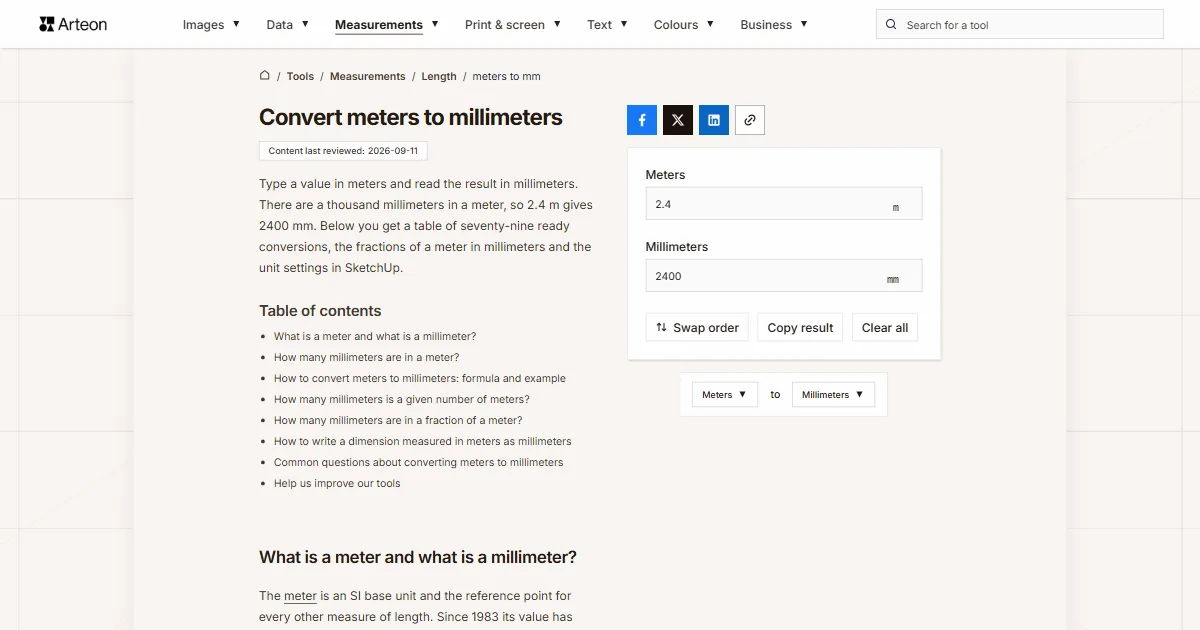
Type a value in meters and read the result in millimeters. There are a thousand millimeters in a meter, so 2.4 m gives 2400 mm. Below you get a table of seventy-nine ready conversions, the fractions of a meter in millimeters and the unit settings in SketchUp.
What is a meter and what is a millimeter?
The meter is an SI base unit and the reference point for every other measure of length. Since 1983 its value has rested on the speed of light: the meter is the distance light travels in vacuum in 1/299,792,458 of a second[1]. Before that the standard was a platinum-iridium bar kept near Paris, and for twenty-three years from 1960 the wavelength of light from krypton-86[1].
A millimeter comes from dividing that meter into a thousand equal parts. The prefix says so on its own: milli- means one thousandth in the SI system[2], so one millimeter is 0.001 meters and the symbol for the unit is mm. Beyond length the same prefix marks off thousandths of other quantities as well: in mass it gives the milligram, in volume the milliliter.
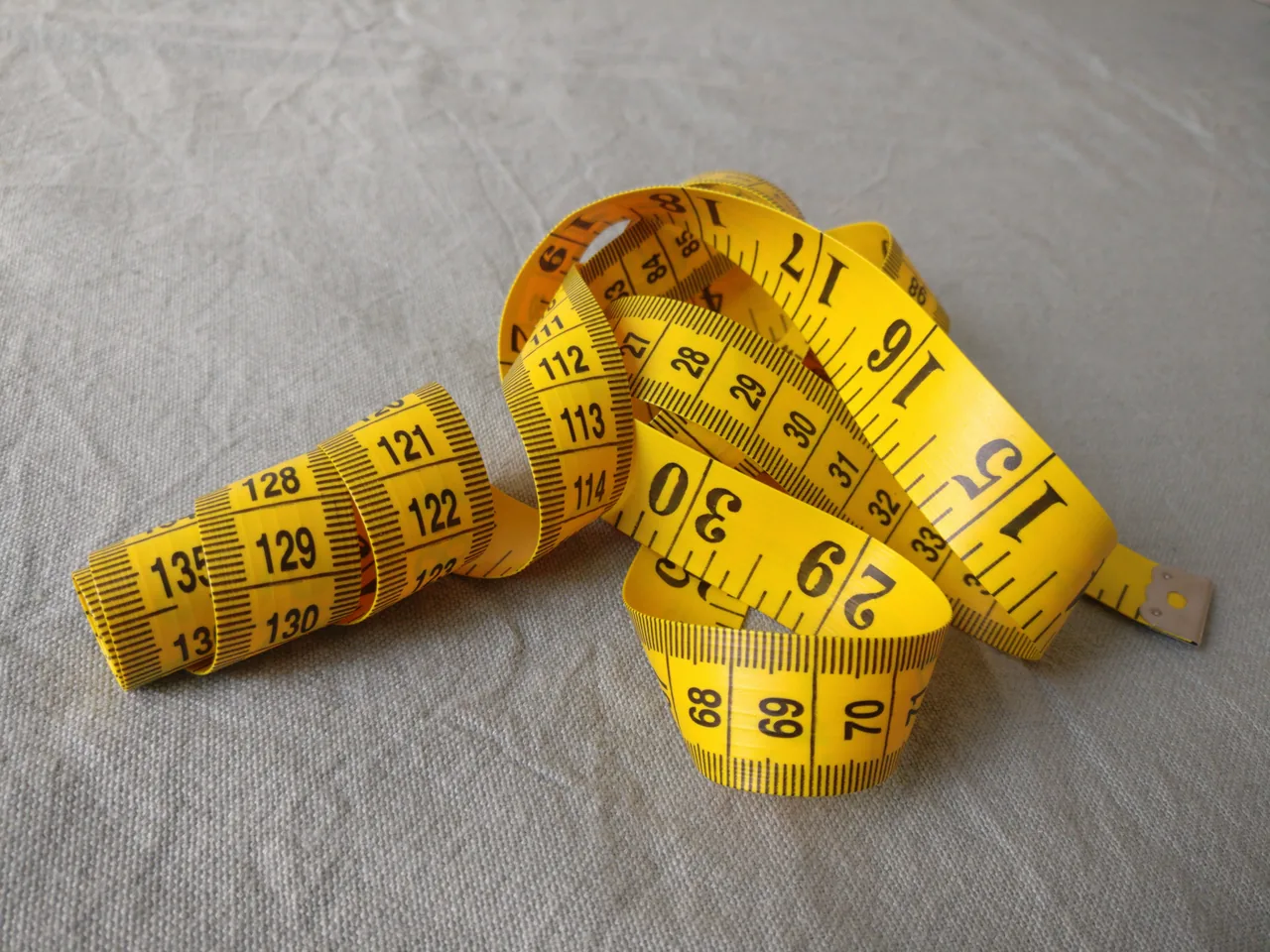
The millimeter matches the smallest graduation you see on an ordinary ruler and on a tape measure. That is why a dimension gets measured in meters and written in millimeters wherever precision counts: on a workshop drawing, in a model for three-dimensional printing and in an order for cut-to-size material.
How many millimeters are in a meter?
A meter contains 1,000 millimeters. To turn meters into millimeters you multiply by a thousand: 2.4 m gives 2,400 mm.
In decimal writing it is enough to move the point three places to the right. A value of 0.5 m becomes 500 mm that way. A value of 12 m gives 12,000 mm, because a whole number simply picks up three zeros.
The field at the top of the page does the same arithmetic while you type. It also works the other way round: a number entered on the millimeter side shows up straight away as meters.
How to convert meters to millimeters: formula and example
The formula has one shape: millimeters = meters × 1000. The same arithmetic can be written as dividing by 0.001, because multiplying by a thousand and dividing by one thousandth lead to the same number.
Take a room height of 2.7 m. Multiply 2.7 by 1,000 and you get 2,700 mm. Values with more decimal places behave the same way: 9.144 m gives 9,144 mm, which is exactly ten yards.
A drawing runs in one unit, and the standard lets that unit be stated once, on the drawing or in an associated document, and left out of the individual dimensions[3]. When that unit is the millimeter, a dimension measured in meters has to be converted into it so the whole set of documentation speaks one measure.
The same dimension reads in centimeters on the meters to centimeters converter. The way back is on the millimeters to meters converter. A route given in kilometers turns into millimeters on the kilometers to millimeters converter, where the multiplier grows from a thousand to a million.
How many millimeters is a given number of meters?
| Meters | Millimeters |
|---|---|
| 0.001 m | 1 mm |
| 0.002 m | 2 mm |
| 0.005 m | 5 mm |
| 0.01 m | 10 mm |
| 0.02 m | 20 mm |
| 0.05 m | 50 mm |
| 0.1 m | 100 mm |
| 0.15 m | 150 mm |
| 0.2 m | 200 mm |
| 0.25 m | 250 mm |
| 0.3 m | 300 mm |
| 0.4 m | 400 mm |
| 0.5 m | 500 mm |
| 0.6 m | 600 mm |
| 0.7 m | 700 mm |
| 0.75 m | 750 mm |
| 0.8 m | 800 mm |
| 0.9 m | 900 mm |
| 1 m | 1,000 mm |
| 1.2 m | 1,200 mm |
| 1.5 m | 1,500 mm |
| 1.8 m | 1,800 mm |
| 2 m | 2,000 mm |
| 2.2 m | 2,200 mm |
| 2.4 m | 2,400 mm |
| 2.5 m | 2,500 mm |
| 2.7 m | 2,700 mm |
| 3 m | 3,000 mm |
| 3.2 m | 3,200 mm |
| 3.5 m | 3,500 mm |
| 3.6 m | 3,600 mm |
| 4 m | 4,000 mm |
| 4.2 m | 4,200 mm |
| 4.3 m | 4,300 mm |
| 4.4 m | 4,400 mm |
| 4.5 m | 4,500 mm |
| 4.6 m | 4,600 mm |
| 4.7 m | 4,700 mm |
| 5 m | 5,000 mm |
| 5.3 m | 5,300 mm |
| 5.4 m | 5,400 mm |
| 5.5 m | 5,500 mm |
| 5.8 m | 5,800 mm |
| 5.9 m | 5,900 mm |
| 6 m | 6,000 mm |
| 6.5 m | 6,500 mm |
| 7 m | 7,000 mm |
| 7.5 m | 7,500 mm |
| 8 m | 8,000 mm |
| 8.2 m | 8,200 mm |
| 8.3 m | 8,300 mm |
| 8.4 m | 8,400 mm |
| 8.5 m | 8,500 mm |
| 8.8 m | 8,800 mm |
| 9 m | 9,000 mm |
| 9.144 m | 9,144 mm |
| 9.2 m | 9,200 mm |
| 9.4 m | 9,400 mm |
| 9.5 m | 9,500 mm |
| 10 m | 10,000 mm |
| 12 m | 12,000 mm |
| 15 m | 15,000 mm |
| 20 m | 20,000 mm |
| 25 m | 25,000 mm |
| 30 m | 30,000 mm |
| 40 m | 40,000 mm |
| 50 m | 50,000 mm |
| 60 m | 60,000 mm |
| 70 m | 70,000 mm |
| 80 m | 80,000 mm |
| 90 m | 90,000 mm |
| 100 m | 100,000 mm |
| 200 m | 200,000 mm |
| 400 m | 400,000 mm |
| 500 m | 500,000 mm |
| 600 m | 600,000 mm |
| 800 m | 800,000 mm |
| 900 m | 900,000 mm |
| 1,000 m | 1,000,000 mm |
How many millimeters are in a fraction of a meter?
| Fraction of a meter | Decimal notation | Millimeters |
|---|---|---|
| 1/2 of a meter | 0.5 m | 500 mm |
| 1/4 of a meter | 0.25 m | 250 mm |
| 1/5 of a meter | 0.2 m | 200 mm |
| 1/8 of a meter | 0.125 m | 125 mm |
| 1/10 of a meter | 0.1 m | 100 mm |
| 1/16 of a meter | 0.0625 m | 62.5 mm |
| 1/20 of a meter | 0.05 m | 50 mm |
| 1/100 of a meter | 0.01 m | 10 mm |
| 1/1000 of a meter | 0.001 m | 1 mm |
How to write a dimension measured in meters as millimeters
The field at the top of the page covers a single number. For a whole model or a whole set of documentation, the unit is set once where the drawing is made.
SketchUp: Window › Model Info › Units
Open Window › Model Info and pick Units from the list on the left. Set Format to Decimal and the length unit to millimeters. A separate Display precision field decides how many decimal places the dimensions carry[4]. A model drawn in meters reads in millimeters after that change, because only the notation changes and the geometry stays the same.Laser measure: meters on the display, millimeters in the accuracy
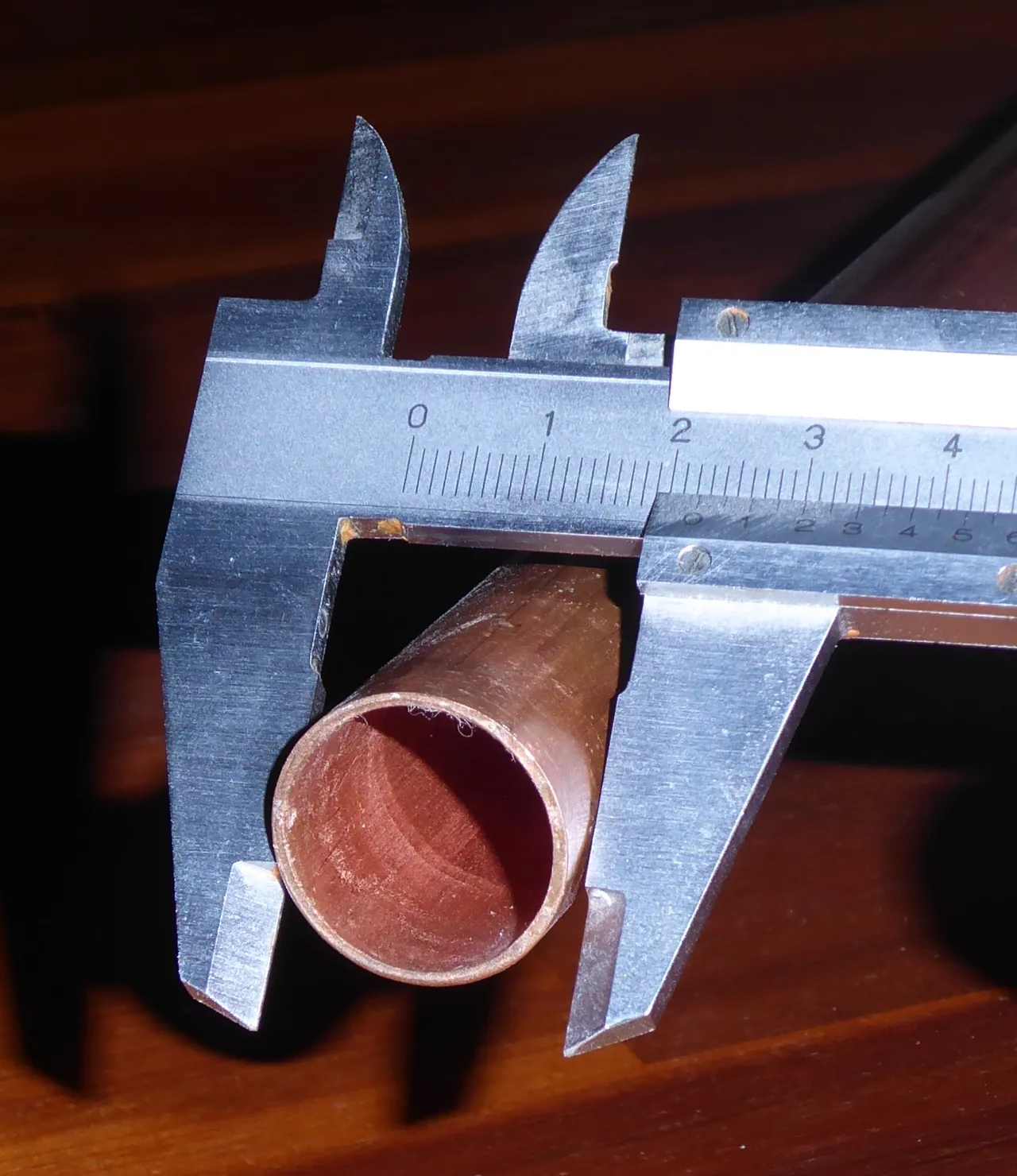
A laser measure gives the distance in meters and its accuracy in millimeters, and it is the second figure that says how many decimal places carry meaning. The Bosch PRO GLM 25-23 measures from 0.150 to 25 meters with an accuracy of ±2.0 mm[5]. A reading of 4.236 m therefore means between 4,234 and 4,238 mm.In your head: the point three places to the right
A value of 3.15 m becomes 3,150 mm that way, and 0.08 m becomes 80 mm. The three places come from the meter containing a thousand millimeters, and a thousand carrying three zeros. Try it on 2.4 m: the answer should read 2,400 mm.
Convert other units to Millimeters
Convert Meters to other units
Sources
- SI Units – Length (definitions of the meter since 1793) — National Institute of Standards and Technology
- Metric (SI) Prefixes — National Institute of Standards and Technology
- ISO 129-1:2018, Technical product documentation (TPD) — Presentation of dimensions and tolerances, clause 4.3 — International Organization for Standardization
- Managing Units of Measurement (SketchUp) — Trimble
- PRO GLM 25-23 — laser measure technical data — Robert Bosch Power Tools
Every figure in the tables was computed from the unit definitions and checked arithmetically before publication. Historical values and the names of local units come from the sources listed above.
Content last reviewed: · written and checked by the Arteon team
Common questions about converting meters to millimeters
How many millimeters is 1 meter?
A meter contains 1,000 millimeters. It follows from the prefix milli-, which stands for one thousandth of the base unit in the SI system.
How many millimeters is 5 meters?
Five meters is 5,000 millimeters. You multiply 5 by a thousand, which comes down to adding three zeros to the figure.
How many millimeters is 2 meters?
Two meters is 2,000 millimeters. The same rule applies to every whole number of meters: 3 m gives 3,000 mm and 4 m gives 4,000 mm.
How many millimeters is 0.5 meters?
Half a meter is 500 millimeters. With decimal values you move the point three places to the right, so 0.5 turns into 500.
How many millimeters is 2.4 meters?
Two meters and forty centimeters is 2,400 millimeters. The point moves three places to the right, so 2.4 turns into 2,400.
How do you convert meters to millimeters in your head?
Move the decimal point three places to the right, and add three zeros to a whole number. A value of 1.75 m becomes 1,750 mm that way, and 18 m becomes 18,000 mm.
Can I type a value into the millimeter field?
Yes. Both fields are live, so a number entered on the millimeter side shows up straight away as meters. The Swap order button opens the page that runs the conversion in the opposite direction.
Why does the program ask for millimeters when I measured in meters?
A drawing runs in one predominant unit, which is stated once and left out of the individual dimensions. ISO 129-1 allows exactly that, and the title block tells you which unit is in force. With the millimeter, precision goes down without fractions.
Help us improve our tools
Got an idea for a new feature, found a bug or want to suggest another tool? Write to us — we reply within 24 hours.