Convert megabytes to megabits
1 MB is 8 Mbit, because a byte has eight bits. Type a number of megabytes and the converter gives it in megabits, the unit used for the capacity of memory chips and older game cartridges.
What are a megabyte and a megabit?
A megabyte (MB) is a million bytes, and every byte is made of eight bits. A megabit (Mbit, often written Mb) is a million bits, so it holds an eighth as much data. The same file therefore always shows a number eight times larger in megabits than in megabytes.
When the letters are all you have, the case tells them apart: MB means megabytes and Mb means megabits. A speed in Mb/s is another quantity, because it counts the megabits that pass each second rather than the data something can hold.
How many megabits are in a megabyte?
1 MB is 8 Mbit. The formula is Mbit = MB × 8, so 4 MB is 32 Mbit and 16 MB is 128 Mbit. The answer is the same whether you count in decimal or in binary, because both units share the M prefix and only the byte, eight bits, separates them.
In Excel, use =CONVERT(A2,"Mbyte","Mbit")[1]. The Mbit to MB converter works the other way, plain bytes turn into bits in the bytes to bits converter, and the data unit converter handles any other pair, including whole megabytes to bits.
What did MAX 330 MEGA on the Neo Geo mean?
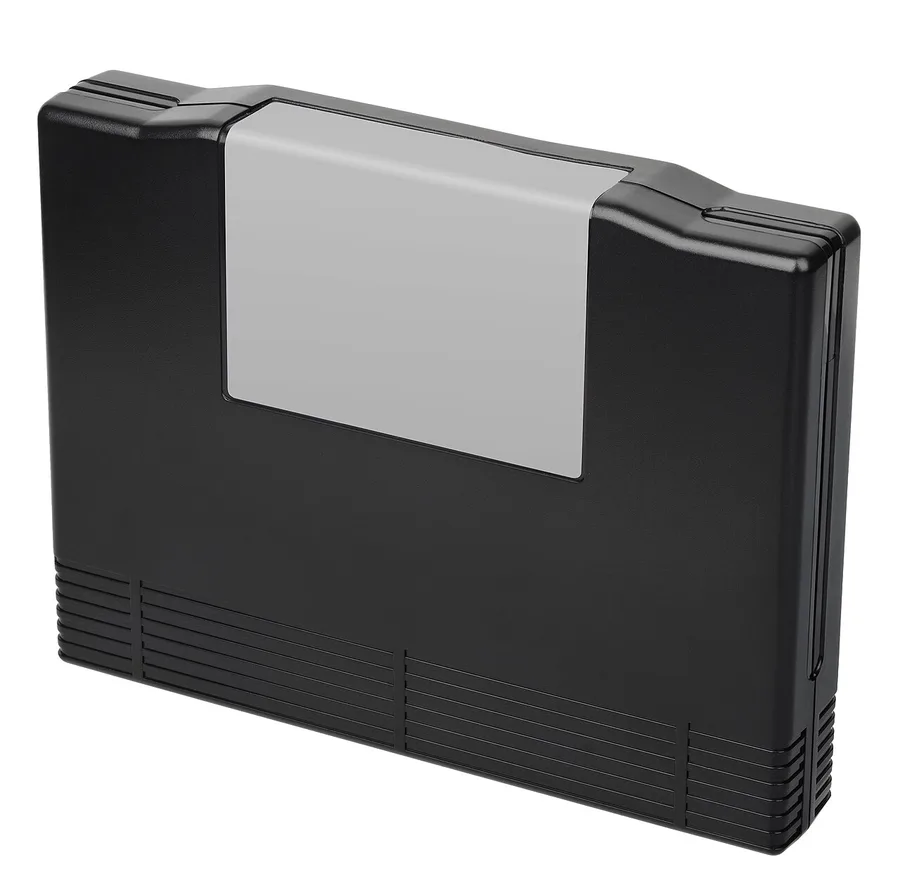
When it started, SNK's Neo Geo showed the words "Max 330 Mega Pro-Gear Spec". They meant that a cartridge could hold up to 330 megabits of data, and games larger than 100 megabits later showed a "The 100Mega Shock!" screen as well[2]. In megabytes that is 41.25 MB for the upper limit and 12.5 MB for the 100-megabit games.
Nintendo 64 cartridges were already described in megabytes, from 4 to 64 MB[3]. That is 32 to 512 Mbit, so the largest N64 cartridge held 64 MB, more than one and a half times the 41.25 MB of the original Neo Geo specification.

How many megabits is a given number of megabytes?
| Megabytes | Megabits |
|---|---|
| 0.125 MB | 1 Mbit |
| 0.25 MB | 2 Mbit |
| 0.5 MB | 4 Mbit |
| 1 MB | 8 Mbit |
| 1.5 MB | 12 Mbit |
| 2 MB | 16 Mbit |
| 3 MB | 24 Mbit |
| 4 MB | 32 Mbit |
| 6 MB | 48 Mbit |
| 8 MB | 64 Mbit |
| 10 MB | 80 Mbit |
| 12.5 MB | 100 Mbit |
| 16 MB | 128 Mbit |
| 32 MB | 256 Mbit |
| 41.25 MB | 330 Mbit |
| 64 MB | 512 Mbit |
| 100 MB | 800 Mbit |
| 128 MB | 1,024 Mbit |
Which ways of writing megabytes does this converter accept?
| What you type | What the converter shows | How we read it |
|---|---|---|
| 0.5 | 4 Mbit | The point marks the decimal part, so the field holds half a megabyte. |
| 0,5 | 4 Mbit | A comma before a single digit can only be a decimal comma, as used across most of Europe, so the result is the same as for 0.5. |
| 1,500 | 12,000 Mbit | A comma before three digits separates thousands, so we count one thousand five hundred megabytes. A hint appears below the field in case you meant 1.5. |
| 41.25 | 330 Mbit | Two decimal places are enough to reach the upper limit of a Neo Geo cartridge. |
| 2½ | 20 Mbit | A ½ sign copied from text is added to the number in front of it, so we count two and a half megabytes. |
| 1e3 | 8,000 Mbit | Scientific notation from a spreadsheet is read as it stands: 1e3 is a thousand megabytes. |
| 4 MB | 32 Mbit | The MB symbol after the number is dropped, because it is the field's own unit. |
| 64 megabytes | 512 Mbit | The full unit name after the number is dropped too, so we count 64 megabytes. |
| 330 Mbit | 330 Mbit | Megabits pasted into the megabyte field become 41.25 MB, a line below the field says so, and the result comes back as 330 Mbit. |
Convert Megabytes to other units
Sources
- CONVERT function — Microsoft
- Neo Geo — Wikipedia
- Nintendo 64 Game Pak — Wikipedia
- Adafruit SPI FLASH Breakout W25Q128 - 128 MBit / 16 MByte — Pimoroni
Every figure in the tables was computed from the unit definitions and checked arithmetically before publication. Historical values and the names of local units come from the sources listed above.
Content last reviewed: · written and checked by the Arteon team
Frequently asked questions about megabytes and megabits
How many megabits are in a gigabyte?
A gigabyte is 1,000 MB in the decimal standard or 1,024 MB in the binary one, so multiplying by 8 gives 8,000 or 8,192 Mbit.
Have a question or suggestion?
If you spot a mistake in a table or a capacity you need is missing, write to us.