Convert inches to yards
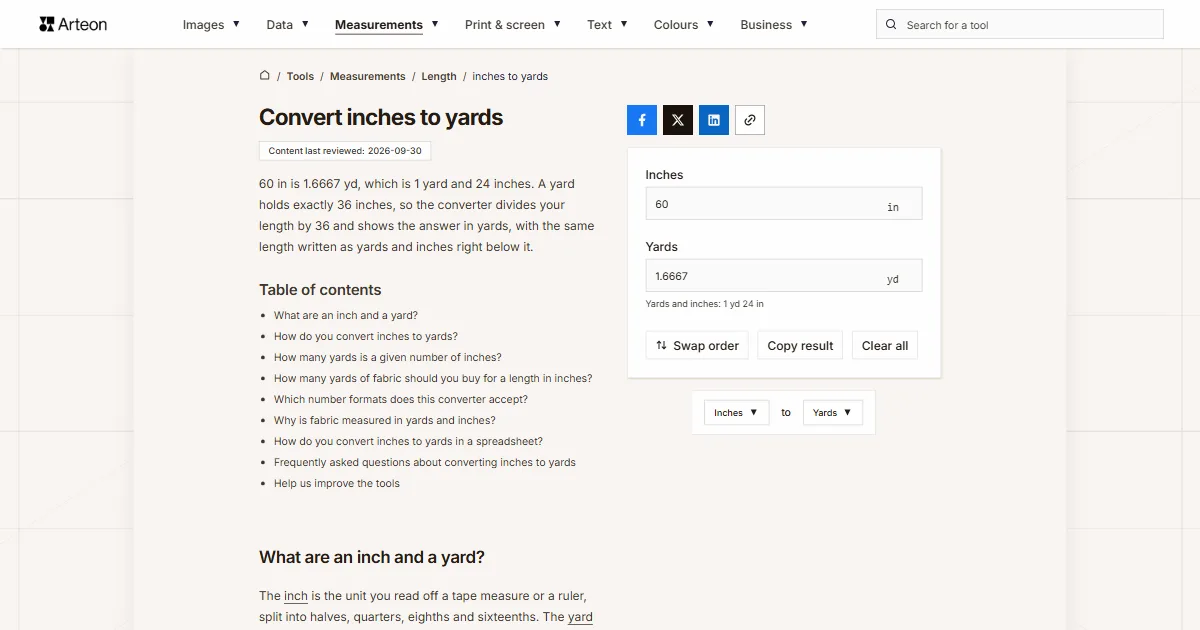
60 in is 1.6667 yd, which is 1 yard and 24 inches. A yard holds exactly 36 inches, so the converter divides your length by 36 and shows the answer in yards, with the same length written as yards and inches right below it.
What are an inch and a yard?
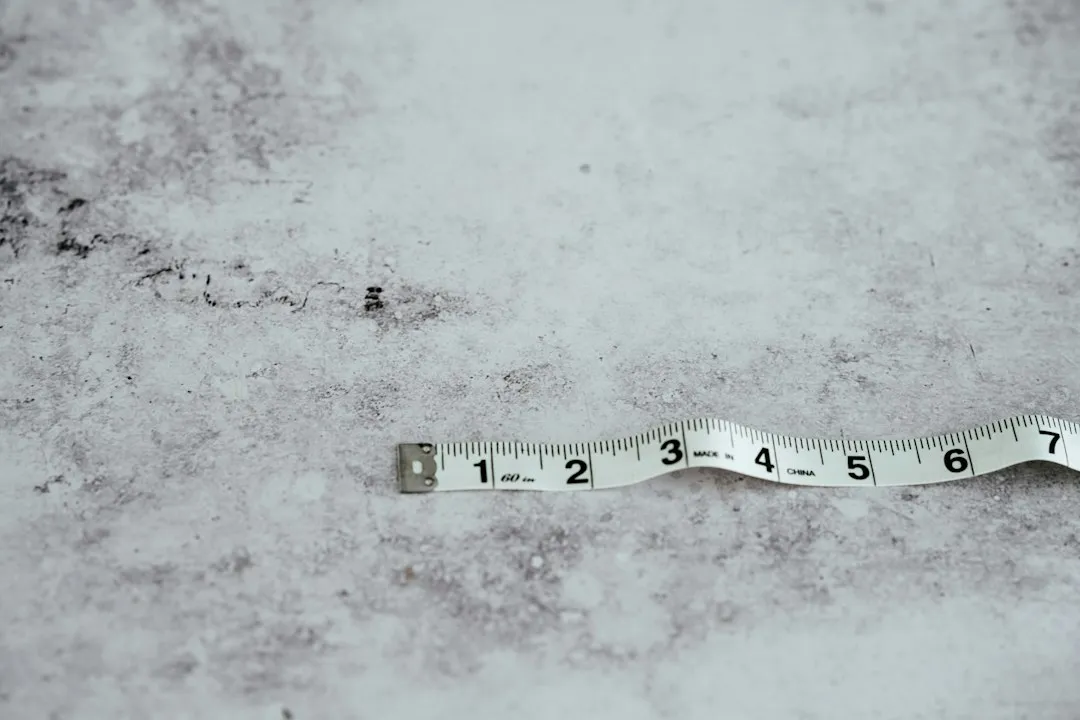
The inch is the unit you read off a tape measure or a ruler, split into halves, quarters, eighths and sixteenths. The yard is three feet of twelve inches each, and British law defines the inch directly as 1/36 of a yard[1]. The 36 is part of the definition, which is why every conversion on this page is exact.
Both units got their metric length in 1959. Since 1 July of that year a yard is 0.9144 meters, and NIST notes that the inch, derived from that yard, is exactly 25.4 millimeters[2]. Inches alone in metric units are handled by the inches to cm converter, and the step in between by the inches to feet converter.
How do you convert inches to yards?
Divide the number of inches by 36. For 90 inches that gives 90 ÷ 36 = 2.5, so two and a half yards.
Most lengths don't divide that cleanly. 100 inches is 2.777… yards, with the 7 repeating forever. The converter rounds that to 2.7778 yd and adds a Yards and inches line underneath: 2 yd 28 in. That second form is exact and easier to measure out with a tape.
You can get it without a calculator too. Count how many whole 36s fit into your inches, and whatever is left over stays in inches. 36 fits into 100 twice, which uses up 72 inches, so 28 inches remain.
If you need feet as well, split the leftover inches once more by 12. 124 inches is 3 yards with 16 inches left, and those 16 inches are 1 foot and 4 inches, so the full answer is 3 yd 1 ft 4 in. Going the other way, from yards back to inches, is what the yards to inches converter does.
How many yards is a given number of inches?
| Inches | Yards | Yards and inches |
|---|---|---|
| 1 in | 0.0278 yd | 0 yd 1 in |
| 2 in | 0.0556 yd | 0 yd 2 in |
| 3 in | 0.0833 yd | 0 yd 3 in |
| 4 in | 0.1111 yd | 0 yd 4 in |
| 5 in | 0.1389 yd | 0 yd 5 in |
| 6 in | 0.1667 yd | 0 yd 6 in |
| 8 in | 0.2222 yd | 0 yd 8 in |
| 9 in | 0.25 yd | 0 yd 9 in |
| 10 in | 0.2778 yd | 0 yd 10 in |
| 12 in | 0.3333 yd | 0 yd 12 in |
| 15 in | 0.4167 yd | 0 yd 15 in |
| 18 in | 0.5 yd | 0 yd 18 in |
| 20 in | 0.5556 yd | 0 yd 20 in |
| 24 in | 0.6667 yd | 0 yd 24 in |
| 27 in | 0.75 yd | 0 yd 27 in |
| 30 in | 0.8333 yd | 0 yd 30 in |
| 32 in | 0.8889 yd | 0 yd 32 in |
| 36 in | 1 yd | 1 yd 0 in |
| 40 in | 1.1111 yd | 1 yd 4 in |
| 42 in | 1.1667 yd | 1 yd 6 in |
| 44 in | 1.2222 yd | 1 yd 8 in |
| 45 in | 1.25 yd | 1 yd 9 in |
| 48 in | 1.3333 yd | 1 yd 12 in |
| 50 in | 1.3889 yd | 1 yd 14 in |
| 54 in | 1.5 yd | 1 yd 18 in |
| 58 in | 1.6111 yd | 1 yd 22 in |
| 60 in | 1.6667 yd | 1 yd 24 in |
| 66 in | 1.8333 yd | 1 yd 30 in |
| 70 in | 1.9444 yd | 1 yd 34 in |
| 72 in | 2 yd | 2 yd 0 in |
| 80 in | 2.2222 yd | 2 yd 8 in |
| 84 in | 2.3333 yd | 2 yd 12 in |
| 90 in | 2.5 yd | 2 yd 18 in |
| 96 in | 2.6667 yd | 2 yd 24 in |
| 100 in | 2.7778 yd | 2 yd 28 in |
| 108 in | 3 yd | 3 yd 0 in |
| 110 in | 3.0556 yd | 3 yd 2 in |
| 120 in | 3.3333 yd | 3 yd 12 in |
| 144 in | 4 yd | 4 yd 0 in |
| 150 in | 4.1667 yd | 4 yd 6 in |
| 180 in | 5 yd | 5 yd 0 in |
| 200 in | 5.5556 yd | 5 yd 20 in |
| 250 in | 6.9444 yd | 6 yd 34 in |
| 300 in | 8.3333 yd | 8 yd 12 in |
| 360 in | 10 yd | 10 yd 0 in |
| 500 in | 13.8889 yd | 13 yd 32 in |
| 1,000 in | 27.7778 yd | 27 yd 28 in |
How many yards of fabric should you buy for a length in inches?
| You need (inches) | In yards | You buy | That is | Spare |
|---|---|---|---|---|
| 10 | 0.2778 yd | 3/8 yd | 13.5 inches | 3.5 inches |
| 20 | 0.5556 yd | 5/8 yd | 22.5 inches | 2.5 inches |
| 25 | 0.6944 yd | 3/4 yd | 27 inches | 2 inches |
| 30 | 0.8333 yd | 7/8 yd | 31.5 inches | 1.5 inches |
| 40 | 1.1111 yd | 1 1/8 yd | 40.5 inches | 0.5 inch |
| 45 | 1.25 yd | 1 1/4 yd | 45 inches | none |
| 50 | 1.3889 yd | 1 1/2 yd | 54 inches | 4 inches |
| 60 | 1.6667 yd | 1 3/4 yd | 63 inches | 3 inches |
| 70 | 1.9444 yd | 2 yd | 72 inches | 2 inches |
| 75 | 2.0833 yd | 2 1/8 yd | 76.5 inches | 1.5 inches |
| 80 | 2.2222 yd | 2 1/4 yd | 81 inches | 1 inch |
| 90 | 2.5 yd | 2 1/2 yd | 90 inches | none |
| 100 | 2.7778 yd | 2 7/8 yd | 103.5 inches | 3.5 inches |
| 110 | 3.0556 yd | 3 1/8 yd | 112.5 inches | 2.5 inches |
| 120 | 3.3333 yd | 3 3/8 yd | 121.5 inches | 1.5 inches |
| 150 | 4.1667 yd | 4 1/4 yd | 153 inches | 3 inches |
Which number formats does this converter accept?
| What you type | What the converter shows | Note |
|---|---|---|
| 60 | 1.6667 yd | A plain number is read as inches, because that's what the field is labeled. |
| 60" | 1.6667 yd | The double quote is the inch mark used for fabric widths on patterns. We drop it and convert the number. |
| 60 inches | 1.6667 yd | A unit name pasted along with the number is dropped, the same way as the symbol in. |
| 1.5 | 0.0417 yd | The period is your decimal point, and that's exactly how we read it. |
| 1,500 | 41.6667 yd | A comma followed by three digits groups thousands, so the field reads fifteen hundred inches. A note under the field shows the other possible reading, 1.5. |
| 1 500 | 41.6667 yd | A space between the thousands is skipped, so this is fifteen hundred inches as well. |
| 1,5 | 0.0417 yd | A comma with fewer than three digits after it is a decimal comma from a European document, so we read one and a half inches. |
| 3/4 | 0.0208 yd | We work out a fraction with a slash ourselves, so three quarters of an inch doesn't need to become 0.75 first. |
| 1 3/8 | 0.0382 yd | A mixed number from a tape measure reads as one and three eighths of an inch. |
| 1-3/8 | 0.0382 yd | The hyphen between the whole number and the fraction, a common American way of writing it, reads like a space, so this is one and three eighths of an inch. |
| 2½ | 0.0694 yd | The ½ character copied from a pattern is added to the number in front of it. |
| 1.000,5 | 27.7917 yd | Periods for thousands and a decimal comma come from a European spreadsheet, and we read this as one thousand and a half inches. |
Why is fabric measured in yards and inches?
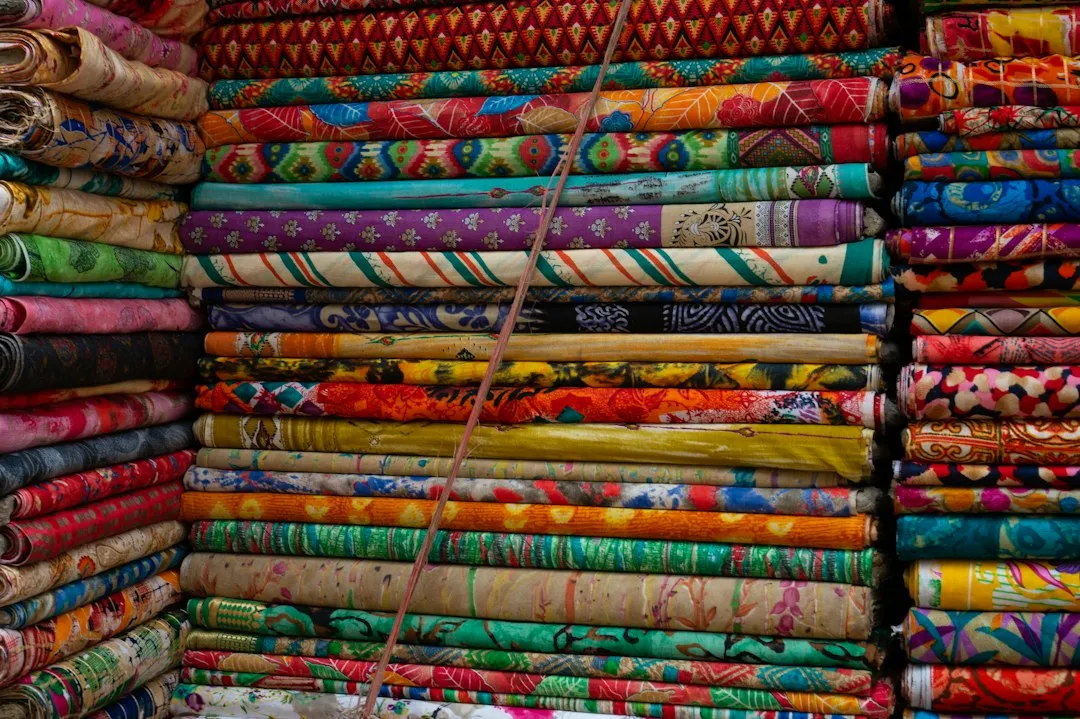
The pairing is older than any tape measure you own. An English law of 1439 abolished selling cloth by the yard and handful and made the yard and inch the measure instead[3]. Merchants had been adding that extra handful to each yard to get around high taxes on cloth[3].
The same split still shows on the bolt itself. Its length is given in yards, usually 40 or 100, and its width in inches, for example 45 or 60[4]. A linear yard means 36 inches along that length, whatever the width of the bolt, so a length you measured in inches converts straight to the yardage you ask for at the counter.
When a pattern gives the length in centimeters instead, the cm to yards converter is the quicker route.
How do you convert inches to yards in a spreadsheet?
For one value the field above is faster. For a whole column of measurements, type the formula once and drag it down.
In Excel the function is CONVERT(number, from_unit, to_unit). The inch is "in" and the yard is "yd", so for a value in cell A1 you type =CONVERT(A1,"in","yd")[5].
Plain division works just as well: =A1/36 gives the same result and also runs in Google Sheets and LibreOffice Calc. Before you fill the whole column, put 36 in A1 and check that the result is 1.
Convert other units to Yards
Convert Inches to other units
Sources
- Weights and Measures Act 1985, Schedule 1 — legislation.gov.uk
- SI Units – Length — National Institute of Standards and Technology
- Yard — Wikipedia
- Bolt (cloth) — Wikipedia
- CONVERT function — Microsoft
Every figure in the tables was computed from the unit definitions and checked arithmetically before publication. Historical values and the names of local units come from the sources listed above.
Content last reviewed: · written and checked by the Arteon team
Frequently asked questions about converting inches to yards
Is 12 inches a yard?
No. 12 inches is one foot, and a yard is three feet, or 36 inches. So 12 inches is a third of a yard, which the converter shows as 0.3333 yd.
Why does the yards result have so many decimals?
Dividing by 36 gives a repeating decimal for most numbers: one inch is 0.02777… of a yard. The converter rounds to four decimal places, and the Yards and inches line under the result gives the leftover in inches, which is exact whenever you type a whole number of inches.
Do American and British yards have the same number of inches?
Yes. Both have 36 inches, and since 1959 both are also the same length, 0.9144 meters[2]. A result from this converter fits an American pattern and a British one alike.
How do I convert yards back to inches?
Click the Swap order button next to the field. It takes you to the yards to inches converter, which multiplies by 36 and also accepts lengths such as 2 yd 18 in.
Help us improve the tools
Write to us if a length you need is missing from the tables or you have a question about working out fabric yardage. We read every message and update the pages.