Convert litres to cubic centimetres
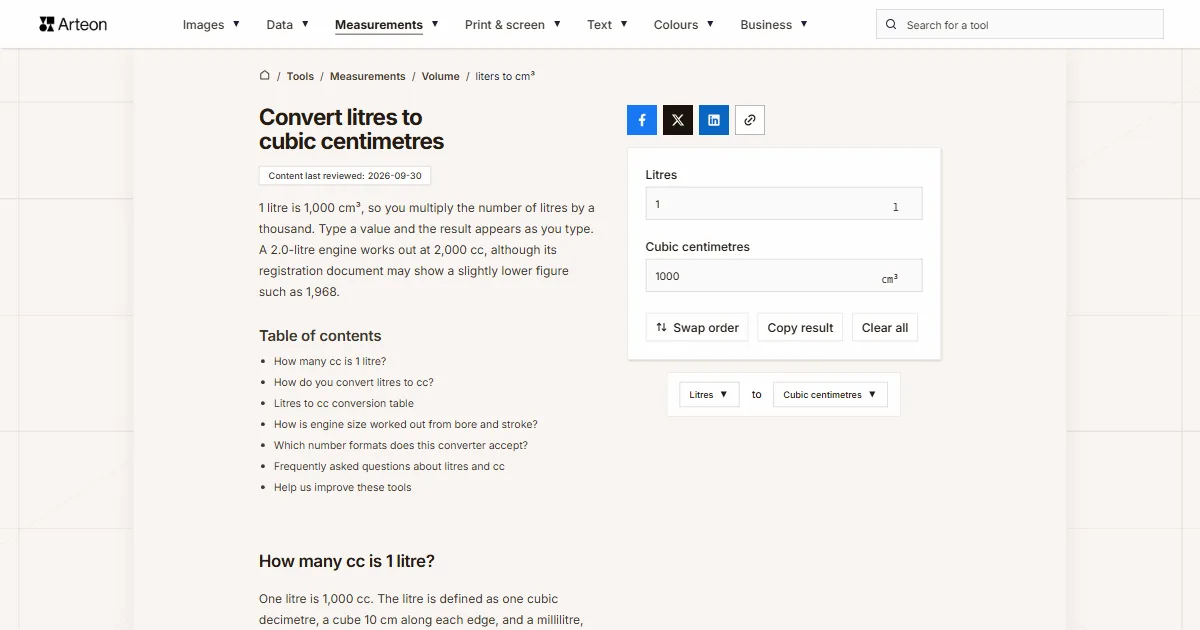
1 litre is 1,000 cm³, so you multiply the number of litres by a thousand. Type a value and the result appears as you type. A 2.0-litre engine works out at 2,000 cc, although its registration document may show a slightly lower figure such as 1,968.
How many cc is 1 litre?
One litre is 1,000 cc. The litre is defined as one cubic decimetre, a cube 10 cm along each edge, and a millilitre, the thousandth part of it, is the same as one cubic centimetre.[1] The number of cc in a volume is therefore the same as its number of millilitres, which the liters to mL converter gives you too.
You will see the litre written as a small l or a capital L, as in 1.6L on a spec sheet. The field accepts both, along with the word litre or liter after the number.
How do you convert litres to cc?
The formula is a single step: cubic centimetres = litres × 1,000. Multiplying by a thousand moves the decimal point three places to the right, with zeros filling any gap. So 1.6 litres is 1,600 cc, 0.5 litres is 500 cc and 2.5 litres is 2,500 cc.
For an engine the answer is an estimate, because the badge in litres is the real size rounded to one decimal place. A car sold as a 1.6 may have 1,598 cc on its log book, and a 2.0 may have 1,968 or 1,998 cc. The exact figure from the paperwork turns back into litres in the cm³ to liters converter.
Litres to cc conversion table
| Litres | Cubic centimetres |
|---|---|
| 0.05 l | 50 cm³ |
| 0.1 l | 100 cm³ |
| 0.125 l | 125 cm³ |
| 0.25 l | 250 cm³ |
| 0.5 l | 500 cm³ |
| 0.6 l | 600 cm³ |
| 0.75 l | 750 cm³ |
| 1 l | 1,000 cm³ |
| 1.2 l | 1,200 cm³ |
| 1.4 l | 1,400 cm³ |
| 1.5 l | 1,500 cm³ |
| 1.6 l | 1,600 cm³ |
| 1.8 l | 1,800 cm³ |
| 2 l | 2,000 cm³ |
| 2.2 l | 2,200 cm³ |
| 2.5 l | 2,500 cm³ |
| 3 l | 3,000 cm³ |
| 3.5 l | 3,500 cm³ |
| 4 l | 4,000 cm³ |
| 5 l | 5,000 cm³ |
| 5.7 l | 5,700 cm³ |
| 6.2 l | 6,200 cm³ |
How is engine size worked out from bore and stroke?
Engine size, or displacement, is the volume the pistons sweep in all the cylinders. It comes from three measurements: the bore, which is the width of a cylinder, the stroke, which is how far the piston travels, and the number of cylinders. The formula is displacement = π ÷ 4 × bore² × stroke × cylinders.[2]
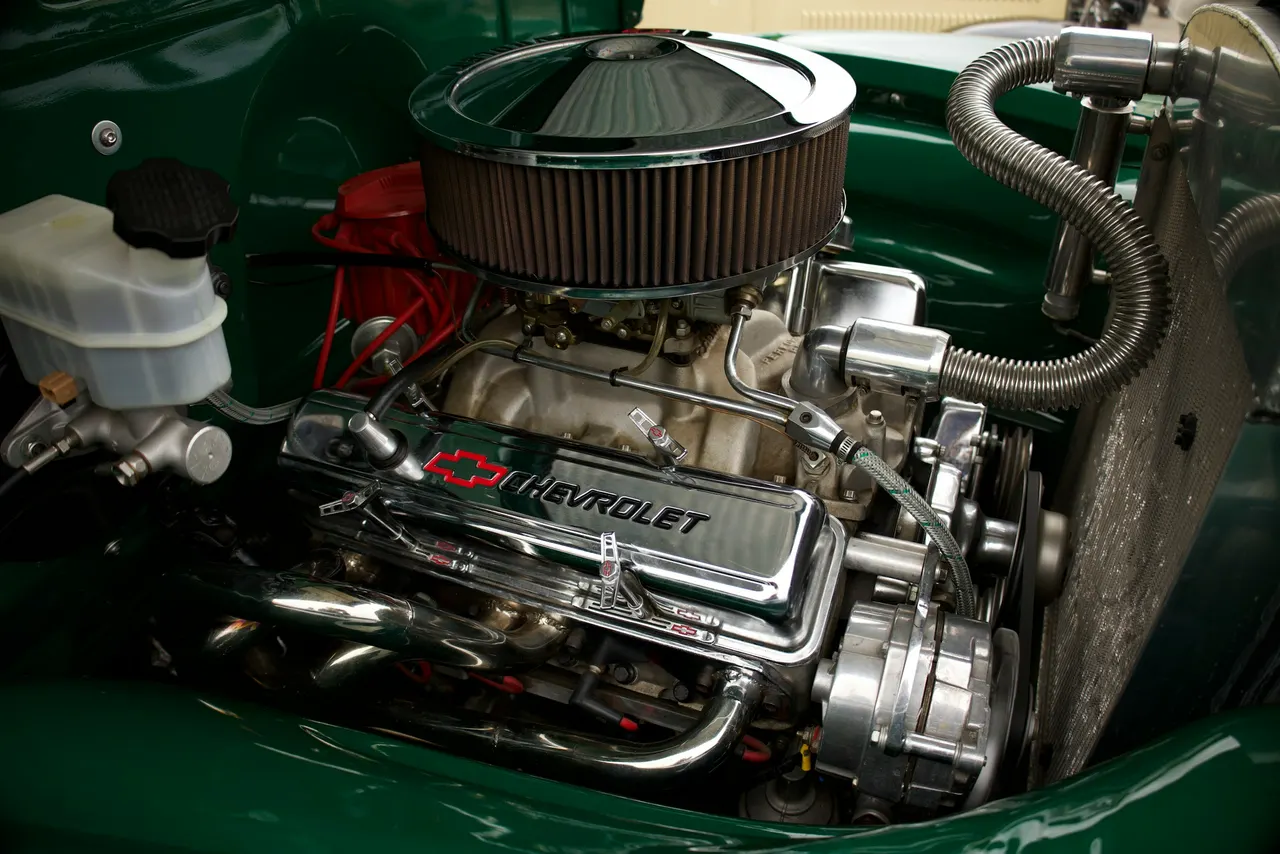
Work in centimetres and the answer comes out in cc. Take a four-cylinder engine whose bore and stroke are both 8.6 cm: 3.1416 ÷ 4 × 8.6 × 8.6 × 8.6 × 4 gives about 1,998 cc. Rounded to one decimal place in litres, that engine is a 2.0.
Which number formats does this converter accept?
| What you type | What the converter shows | How we read it |
|---|---|---|
| 1.6 | 1600 cm³ | The decimal point separates the fraction, exactly as you would expect. |
| 1,6 | 1600 cm³ | A comma followed by one digit can only be a decimal comma, as on a European spec sheet, so we read it as one point six. |
| 1.6L | 1600 cm³ | A capital L straight after the number is the litre symbol, and we drop it. |
| 2 litres | 2000 cm³ | The unit name is dropped in British or American spelling. |
| 1.5 liter | 1500 cm³ | The singular form works the same way as the plural. |
| 1598 cc | 1598 cm³ | A figure pasted with cc is recognised as cubic centimetres, so the result shows it unchanged. |
Convert Litres to other units
Sources
- Litre — Wikipedia
- Cubic centimetre — engine displacement formula — Wikipedia
- Cubic inch — Wikipedia
Every figure in the tables was computed from the unit definitions and checked arithmetically before publication. Historical values and the names of local units come from the sources listed above.
Content last reviewed: · written and checked by the Arteon team
Frequently asked questions about litres and cc
How many cubic inches is a 2.0-litre engine?
About 122 cubic inches. One cubic inch is 16.387064 cm³, so you divide the 2,000 cc by that number.[3] A 5.7-litre engine comes to about 348 cubic inches in the same way.
Help us improve these tools
Spotted a mistake in a table or have an idea for this converter? Write to us.