Convert feet to kilometres
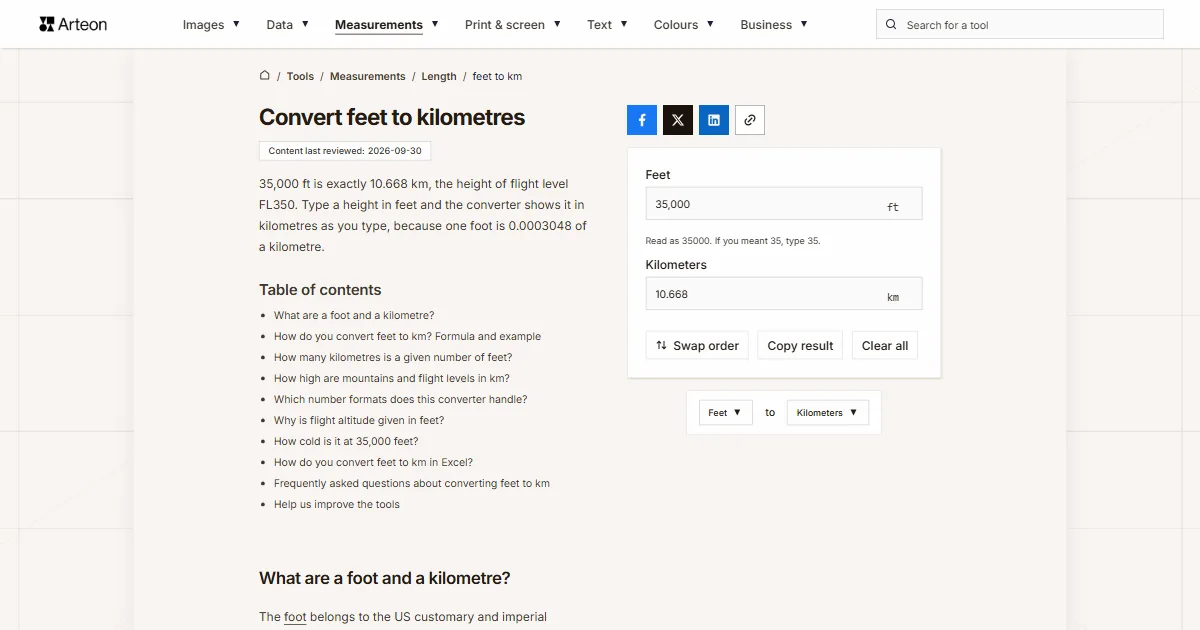
35,000 ft is exactly 10.668 km, the height of flight level FL350. Type a height in feet and the converter shows it in kilometres as you type, because one foot is 0.0003048 of a kilometre.
What are a foot and a kilometre?
The foot belongs to the US customary and imperial systems. It holds 12 inches, and three feet make a yard. Since 1 July 1959 the inch has been exactly 25.4 millimetres, which fixes the foot at 0.3048 metres[1]. In the United States it is the everyday unit for elevation and building height, and most of the world's pilots read their altitude in it.
A kilometre is 1,000 metres. The metre is the SI base unit of length, defined through the speed of light: it is the distance light travels in a vacuum in 1/299,792,458 of a second[2]. Australia measures every road distance in kilometres, the UK still signposts roads in miles, and in the United States kilometres turn up mainly in 5K and 10K races.
The two units meet in the metre. A foot is 0.3048 metres, and moving the decimal point three places to the left turns that into 0.0003048 kilometres, the factor this page works with. For the step in metres alone, use the feet to meters converter.
How do you convert feet to km? Formula and example
Multiply the number of feet by 0.0003048. Dividing by 3,280.84 gives the same answer, because that many feet fit into one kilometre.
Say the seat-back map shows 37,000 feet. 37,000 × 0.0003048 = 11.2776 km, so the plane is a little over 11 kilometres up. Any other value works the same way: 5,000 feet comes to 1.524 km and 12,000 feet to 3.6576 km.
For a quick estimate in your head, treat each 1,000 feet as 0.3 km. Thirty-five thousand feet then gives 35 × 0.3 = 10.5 km against an exact 10.668 km. The shortcut runs about 1.6 percent low, which is fine for small talk on a flight but not for a calculation you want to keep.
The reverse direction has its own page, the km to feet converter, and the Swap order button takes you there with your result.
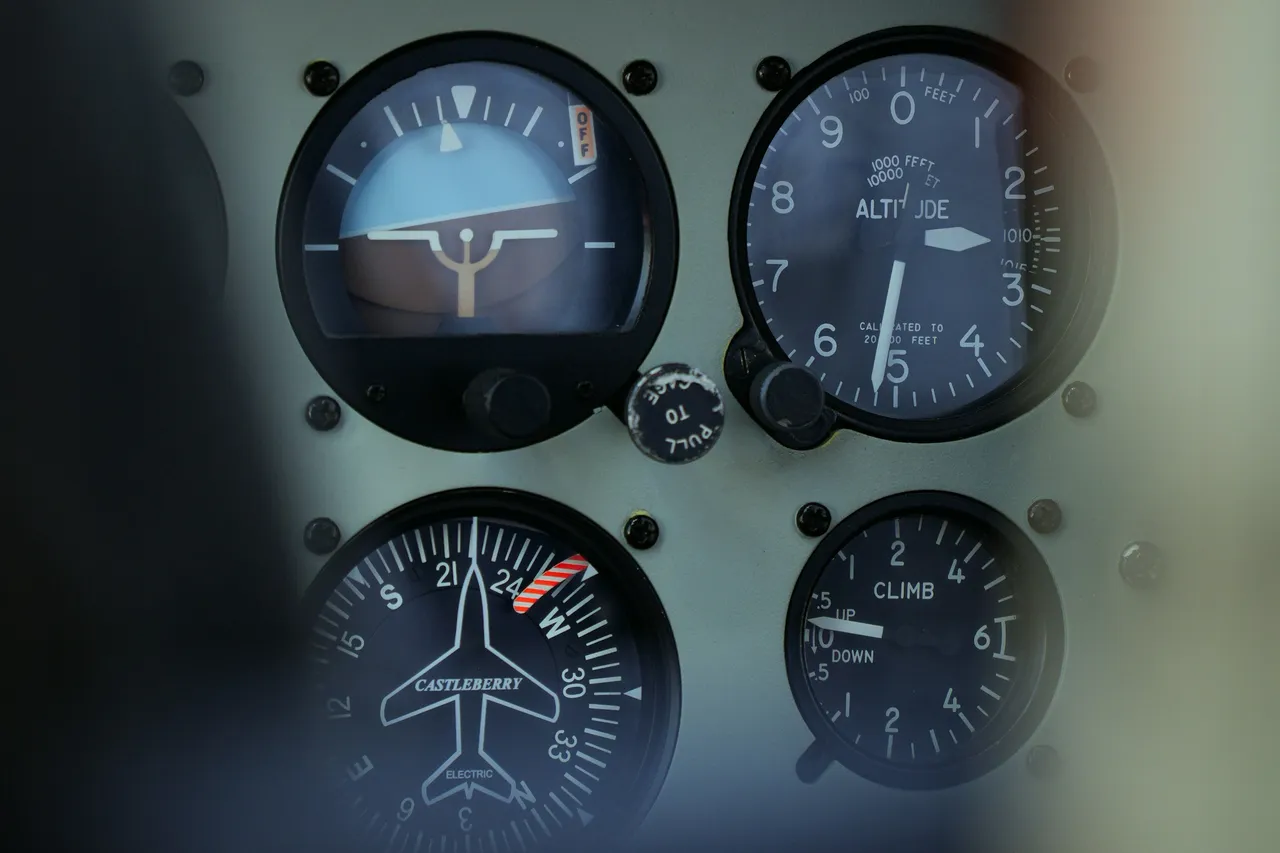
How many kilometres is a given number of feet?
| Feet | Kilometres | Metres |
|---|---|---|
| 1 ft | 0.0003048 km | 0.3 m |
| 5 ft | 0.001524 km | 1.52 m |
| 10 ft | 0.003048 km | 3.05 m |
| 50 ft | 0.01524 km | 15.24 m |
| 100 ft | 0.03048 km | 30.48 m |
| 200 ft | 0.06096 km | 60.96 m |
| 250 ft | 0.0762 km | 76.2 m |
| 300 ft | 0.09144 km | 91.44 m |
| 400 ft | 0.12192 km | 121.92 m |
| 500 ft | 0.1524 km | 152.4 m |
| 600 ft | 0.18288 km | 182.88 m |
| 700 ft | 0.21336 km | 213.36 m |
| 750 ft | 0.2286 km | 228.6 m |
| 800 ft | 0.24384 km | 243.84 m |
| 900 ft | 0.27432 km | 274.32 m |
| 1,000 ft | 0.3048 km | 304.8 m |
| 1,500 ft | 0.4572 km | 457.2 m |
| 2,000 ft | 0.6096 km | 609.6 m |
| 2,500 ft | 0.762 km | 762 m |
| 3,000 ft | 0.9144 km | 914.4 m |
| 3,500 ft | 1.0668 km | 1,066.8 m |
| 4,000 ft | 1.2192 km | 1,219.2 m |
| 5,000 ft | 1.524 km | 1,524 m |
| 6,000 ft | 1.8288 km | 1,828.8 m |
| 6,500 ft | 1.9812 km | 1,981.2 m |
| 7,000 ft | 2.1336 km | 2,133.6 m |
| 8,000 ft | 2.4384 km | 2,438.4 m |
| 9,000 ft | 2.7432 km | 2,743.2 m |
| 10,000 ft | 3.048 km | 3,048 m |
| 12,000 ft | 3.6576 km | 3,657.6 m |
| 13,000 ft | 3.9624 km | 3,962.4 m |
| 14,000 ft | 4.2672 km | 4,267.2 m |
| 15,000 ft | 4.572 km | 4,572 m |
| 18,000 ft | 5.4864 km | 5,486.4 m |
| 20,000 ft | 6.096 km | 6,096 m |
| 25,000 ft | 7.62 km | 7,620 m |
| 28,000 ft | 8.5344 km | 8,534.4 m |
| 30,000 ft | 9.144 km | 9,144 m |
| 31,000 ft | 9.4488 km | 9,448.8 m |
| 32,000 ft | 9.7536 km | 9,753.6 m |
| 33,000 ft | 10.0584 km | 10,058.4 m |
| 34,000 ft | 10.3632 km | 10,363.2 m |
| 35,000 ft | 10.668 km | 10,668 m |
| 36,000 ft | 10.9728 km | 10,972.8 m |
| 37,000 ft | 11.2776 km | 11,277.6 m |
| 38,000 ft | 11.5824 km | 11,582.4 m |
| 39,000 ft | 11.8872 km | 11,887.2 m |
| 40,000 ft | 12.192 km | 12,192 m |
| 41,000 ft | 12.4968 km | 12,496.8 m |
| 43,000 ft | 13.1064 km | 13,106.4 m |
| 45,000 ft | 13.716 km | 13,716 m |
| 50,000 ft | 15.24 km | 15,240 m |
| 60,000 ft | 18.288 km | 18,288 m |
| 100,000 ft | 30.48 km | 30,480 m |
| 1,000,000 ft | 304.8 km | 304,800 m |
How high are mountains and flight levels in km?
| Height | Feet | Kilometres | Metres |
|---|---|---|---|
| Munro, a Scottish mountain over this height | 3,000 ft | 0.9144 km | 914.4 m |
| Fourteener, a peak at least this high | 14,000 ft | 4.2672 km | 4,267.2 m |
| Mount Whitney, highest point in the contiguous United States | 14,505 ft | 4.421124 km | 4,421.12 m |
| Transition altitude in the United States | 18,000 ft | 5.4864 km | 5,486.4 m |
| Denali, federally named Mount McKinley | 20,310 ft | 6.190488 km | 6,190.49 m |
| Flight level FL290, bottom of the RVSM band | 29,000 ft | 8.8392 km | 8,839.2 m |
| Flight level FL350 | 35,000 ft | 10.668 km | 10,668 m |
| Flight level FL410, top of the RVSM band | 41,000 ft | 12.4968 km | 12,496.8 m |
| Height below which subsonic airliners typically cruise | 44,000 ft | 13.4112 km | 13,411.2 m |
| Concorde maximum cruising altitude | 60,000 ft | 18.288 km | 18,288 m |
Which number formats does this converter handle?
| What you type | What the converter shows | Note |
|---|---|---|
| 35,000 | 10.668 km | A comma followed by three digits is read as a thousands separator, so the field works with thirty-five thousand feet. A hint under the field shows the other possible reading. |
| 35 000 | 10.668 km | A space between the thousands, as printed in many European documents, is skipped over as well. |
| 35.000 | 0.010668 km | A point is the decimal mark in English, so this reads as 35 feet and a hint appears under the field. Heights copied from a German or Spanish page write thousands this way, so type them without the point. |
| 10.5 | 0.0032004 km | The decimal point is read exactly as English writes it. |
| 10,5 | 0.0032004 km | A comma with fewer than three digits after it is read as a decimal comma, as used across most of Europe. |
| 1/2 | 0.0001524 km | We work out a slash fraction ourselves, so half a foot needs no conversion to 0.5 first. |
| 2½ | 0.000762 km | The ½ character copied from a document is added to the number in front of it. |
| 35000 ft | 10.668 km | A unit symbol pasted along with the number is left out and only the number is converted. |
| 3.5e4 | 10.668 km | Scientific notation from a calculator or spreadsheet is expanded to 35,000 feet. |
Why is flight altitude given in feet?
A flight level is a height in hundreds of feet measured against a standard pressure of 1013 hPa, or 29.92 inHg[3]. With every altimeter set to that value, all aircraft share one reference, and the vertical gap between them holds even when the air pressure on the ground changes. As a result, FL350 is not always exactly 10.668 km above the sea, because the true height shifts with the weather.
The International Civil Aviation Organization has recommended a move to SI units since 1979, including metres for flight levels[3]. Only a few countries use metre levels, among them China and Mongolia, and Russia switched to feet above the transition altitude on 17 November 2011[3]. The km to feet converter shows the Chinese metre levels in feet.
How cold is it at 35,000 feet?
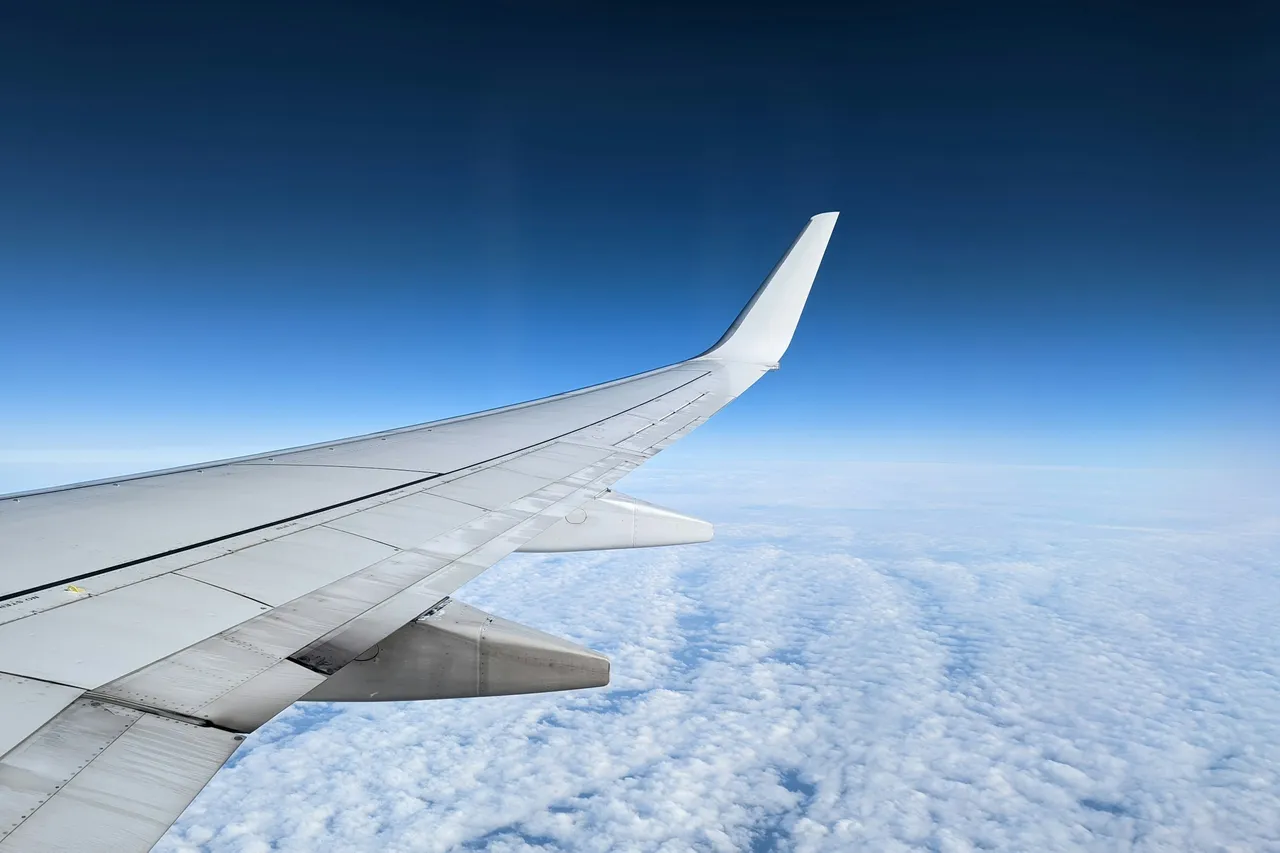
Aviation works out temperature at height from the International Standard Atmosphere. The model starts at 15 °C at sea level and cools by 6.5 °C for every kilometre up to 11 km[10]. From 11 to 20 km the temperature stays at −56.5 °C[10].
That is why a height in feet has to become kilometres first. 35,000 feet is 10.668 km, so the temperature drops by 6.5 × 10.668 = 69.3 °C to about −54.3 °C, or roughly −66 °F. At 30,000 feet, which is 9.144 km, the model gives −44.4 °C.
The 11 km boundary sits at 36,089 feet. Above it the standard temperature stops falling, so the model gives the same −56.5 °C at 39,000 and at 41,000 feet. The real air outside the window can be warmer or colder, because the model describes average conditions.
How do you convert feet to km in Excel?
For a column of heights, one formula dragged down does the job. Excel's CONVERT function takes the syntax CONVERT(number,from_unit,to_unit)[11], with "ft" for the foot and "km" for the kilometre. For a height in cell B2 the formula reads =CONVERT(B2,"ft","km").
Google Sheets and LibreOffice Calc handle the same job with plain multiplication: =B2*0.0003048. Before you fill the whole column, put 10,000 into B2 and check that the result shows 3.048.
Convert other units to Kilometers
Convert Feet to other units
Sources
- SI Units – Length — National Institute of Standards and Technology
- SI base unit: metre (m) — Bureau International des Poids et Mesures
- Flight level — Wikipedia
- Munro — Wikipedia
- Fourteener — Wikipedia
- Mount Whitney — Wikipedia
- Denali — Wikipedia
- Reduced vertical separation minima — Wikipedia
- Concorde — Wikipedia
- International Standard Atmosphere — Wikipedia
- CONVERT function — Microsoft
- U.S. Survey Foot: Revised Unit Conversion Factors — National Institute of Standards and Technology
Every figure in the tables was computed from the unit definitions and checked arithmetically before publication. Historical values and the names of local units come from the sources listed above.
Content last reviewed: · written and checked by the Arteon team
Frequently asked questions about converting feet to km
Does the US survey foot change the result?
Not any more. The US survey foot was 0.3048006 metres, and NIST has asked for it to be used only with historic data after 31 December 2022[12]. At 35,000 feet the two feet differ by 2.1 centimetres, and this converter uses the international foot.
How do I convert feet to km per hour?
Feet measure length and kilometres per hour measure speed, so feet alone cannot become km/h. If you have a speed in feet per second, multiply it by 1.09728: 100 feet per second is 109.728 km/h.
Can I enter a negative number?
Yes. The field accepts a minus sign, so -1,000 feet gives -0.3048 km. That helps with depths and places below sea level.
Why does the result show seven decimal places?
One foot is 0.0003048 of a kilometre, so for short lengths the first digit only turns up in the fourth place. Seven places show the whole factor, and trailing zeros are dropped, so 35,000 feet simply reads 10.668 km.
How do I convert a height in feet and inches?
Kilometres are far too large for a person's height. A value such as 5′11″ goes straight into the feet to cm converter.
What does the abbreviation ft stand for?
It is short for foot, and the plural feet uses the same symbol. In aviation you will also meet FL, which stands for flight level.
Help us improve the tools
Write to us if a height is missing from the tables or you have a question about converting flight levels. We read every message and keep the pages up to date.