Convert kilometres to feet
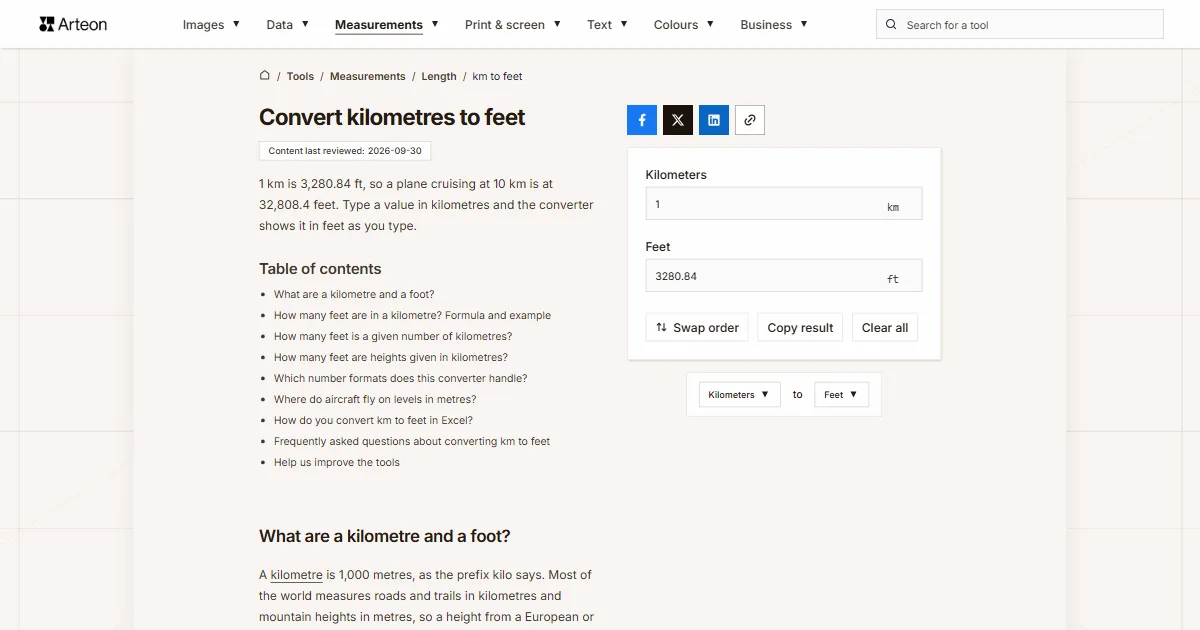
1 km is 3,280.84 ft, so a plane cruising at 10 km is at 32,808.4 feet. Type a value in kilometres and the converter shows it in feet as you type.
What are a kilometre and a foot?
A kilometre is 1,000 metres, as the prefix kilo says. Most of the world measures roads and trails in kilometres and mountain heights in metres, so a height from a European or Asian map usually arrives in metres or kilometres.
The foot has been exactly 0.3048 metres since 1 July 1959, the day the inch was set at 25.4 millimetres[1]. Americans read summit heights, trail elevation gain and aircraft altitude in feet.
A kilometre holds 3,280.84 feet. The number is not round because the two units come from different systems and only meet through the metre. Single metres go through the meters to feet converter.
How many feet are in a kilometre? Formula and example
Multiply the kilometres by 3,280.84. For an exact answer, divide by 0.0003048 instead, because that is the length of one foot in kilometres and it needs no rounding.
Here is an example. Ben Nevis is 1.345 km high, and 1.345 × 3,280.84 = 4,412.73 feet. A plane at 10 km works out the same way at 32,808.4 feet.
To estimate in your head, multiply the kilometres by 3.3 and read the answer in thousands of feet. Ten kilometres then comes to 33,000 feet against an exact 32,808.4, so the shortcut runs about 0.6 percent high.
The other direction lives on the feet to km converter, and the Swap order button takes you there with your result.
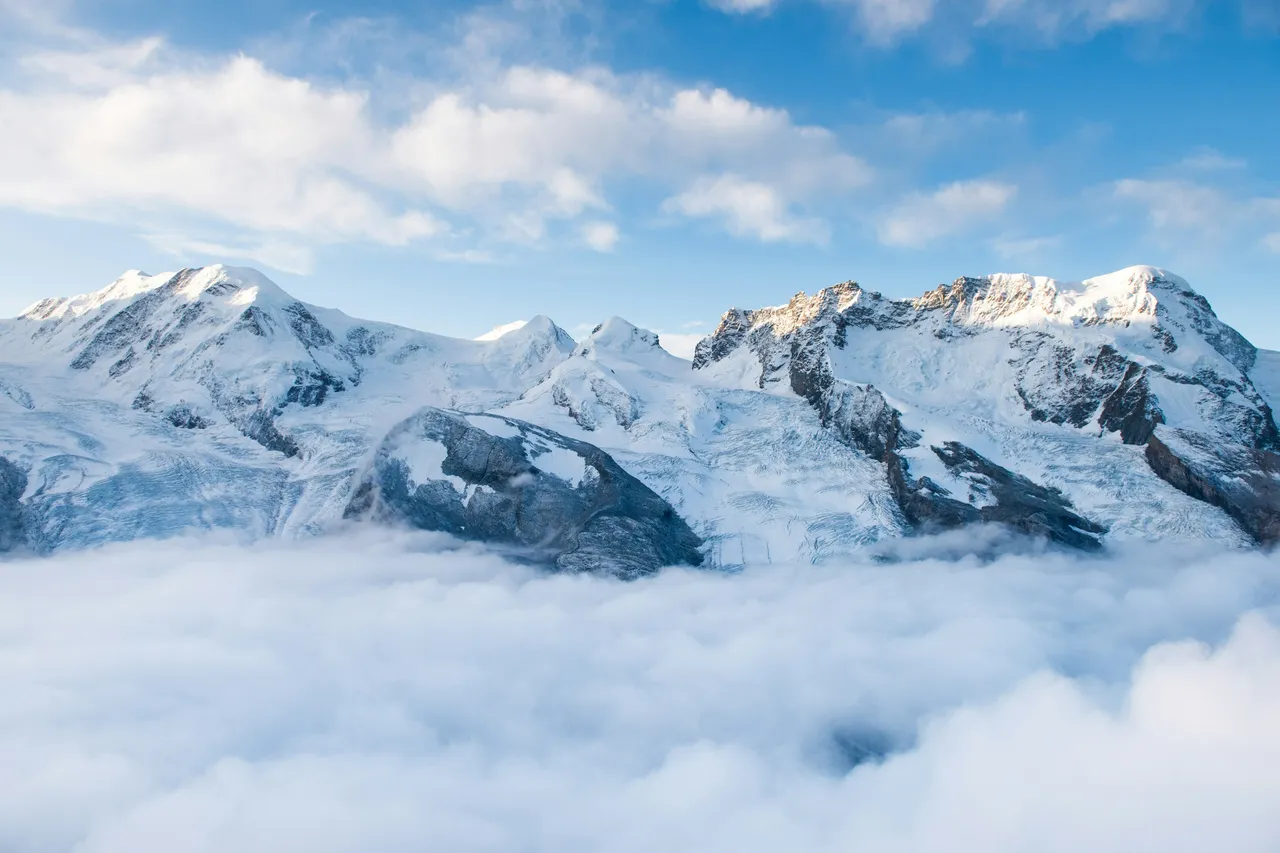
How many feet is a given number of kilometres?
| Kilometres | Feet | Metres |
|---|---|---|
| 0.001 km | 3.28 ft | 1 m |
| 0.01 km | 32.81 ft | 10 m |
| 0.1 km | 328.08 ft | 100 m |
| 0.25 km | 820.21 ft | 250 m |
| 0.5 km | 1,640.42 ft | 500 m |
| 0.75 km | 2,460.63 ft | 750 m |
| 1 km | 3,280.84 ft | 1,000 m |
| 1.5 km | 4,921.26 ft | 1,500 m |
| 2 km | 6,561.68 ft | 2,000 m |
| 2.5 km | 8,202.1 ft | 2,500 m |
| 3 km | 9,842.52 ft | 3,000 m |
| 3.5 km | 11,482.94 ft | 3,500 m |
| 4 km | 13,123.36 ft | 4,000 m |
| 4.5 km | 14,763.78 ft | 4,500 m |
| 5 km | 16,404.2 ft | 5,000 m |
| 6 km | 19,685.04 ft | 6,000 m |
| 7 km | 22,965.88 ft | 7,000 m |
| 8 km | 26,246.72 ft | 8,000 m |
| 9 km | 29,527.56 ft | 9,000 m |
| 10 km | 32,808.4 ft | 10,000 m |
| 10.5 km | 34,448.82 ft | 10,500 m |
| 11 km | 36,089.24 ft | 11,000 m |
| 12 km | 39,370.08 ft | 12,000 m |
| 13 km | 42,650.92 ft | 13,000 m |
| 14 km | 45,931.76 ft | 14,000 m |
| 15 km | 49,212.6 ft | 15,000 m |
| 18 km | 59,055.12 ft | 18,000 m |
| 20 km | 65,616.8 ft | 20,000 m |
| 25 km | 82,021 ft | 25,000 m |
| 30 km | 98,425.2 ft | 30,000 m |
| 35 km | 114,829.4 ft | 35,000 m |
| 40 km | 131,233.6 ft | 40,000 m |
| 50 km | 164,041.99 ft | 50,000 m |
| 80 km | 262,467.19 ft | 80,000 m |
| 100 km | 328,083.99 ft | 100,000 m |
| 150 km | 492,125.98 ft | 150,000 m |
| 200 km | 656,167.98 ft | 200,000 m |
| 400 km | 1,312,335.96 ft | 400,000 m |
| 500 km | 1,640,419.95 ft | 500,000 m |
| 1,000 km | 3,280,839.9 ft | 1,000,000 m |
How many feet are heights given in kilometres?
| Height | Kilometres | Feet |
|---|---|---|
| Ben Nevis, highest mountain in the UK | 1.345 km | 4,412.73 ft |
| Mount Kosciuszko, highest mountain of mainland Australia | 2.228 km | 7,309.71 ft |
| Mount Everest | 8.84886 km | 29,031.69 ft |
| Chinese level of 8,900 m, flown at 29,100 ft | 8.9 km | 29,199.48 ft |
| Chinese level of 10,700 m, flown at 35,100 ft | 10.7 km | 35,104.99 ft |
| Tropopause in the standard atmosphere | 11 km | 36,089.24 ft |
| Chinese level of 12,500 m, flown at 41,100 ft | 12.5 km | 41,010.5 ft |
| Height above which the US armed forces award astronaut wings | 80.4672 km | 264,000 ft |
| Kármán line | 100 km | 328,083.99 ft |
Which number formats does this converter handle?
| What you type | What the converter shows | Note |
|---|---|---|
| 1.345 | 4412.73 ft | The decimal point is read exactly as English writes it, so this is the height of Ben Nevis in kilometres. A hint under the field shows the other possible reading, 1345. |
| 1,345 | 4412729.66 ft | A comma followed by three digits is a thousands separator in English, so the field converts 1,345 kilometres and shows a hint under the field. For Ben Nevis, type 1.345 with a point. |
| 2,5 | 8202.1 ft | A comma with fewer than three digits after it is read as a decimal comma, as used across most of Europe. |
| 1 000 | 3280839.9 ft | A space between the thousands is skipped, so the field converts one thousand kilometres. |
| 1/2 | 1640.42 ft | We work out a slash fraction ourselves, so half a kilometre needs no conversion to 0.5. |
| 2½ | 8202.1 ft | The ½ character copied from a document is added to the number in front of it. |
| 10 km | 32808.4 ft | A unit symbol pasted along with the number is left out and only the number is converted. |
| 1e2 | 328083.99 ft | Scientific notation from a calculator is expanded to one hundred kilometres. |
| -10.9 | -35761.15 ft | A minus sign is accepted, so depths below sea level convert as well. |
Where do aircraft fly on levels in metres?
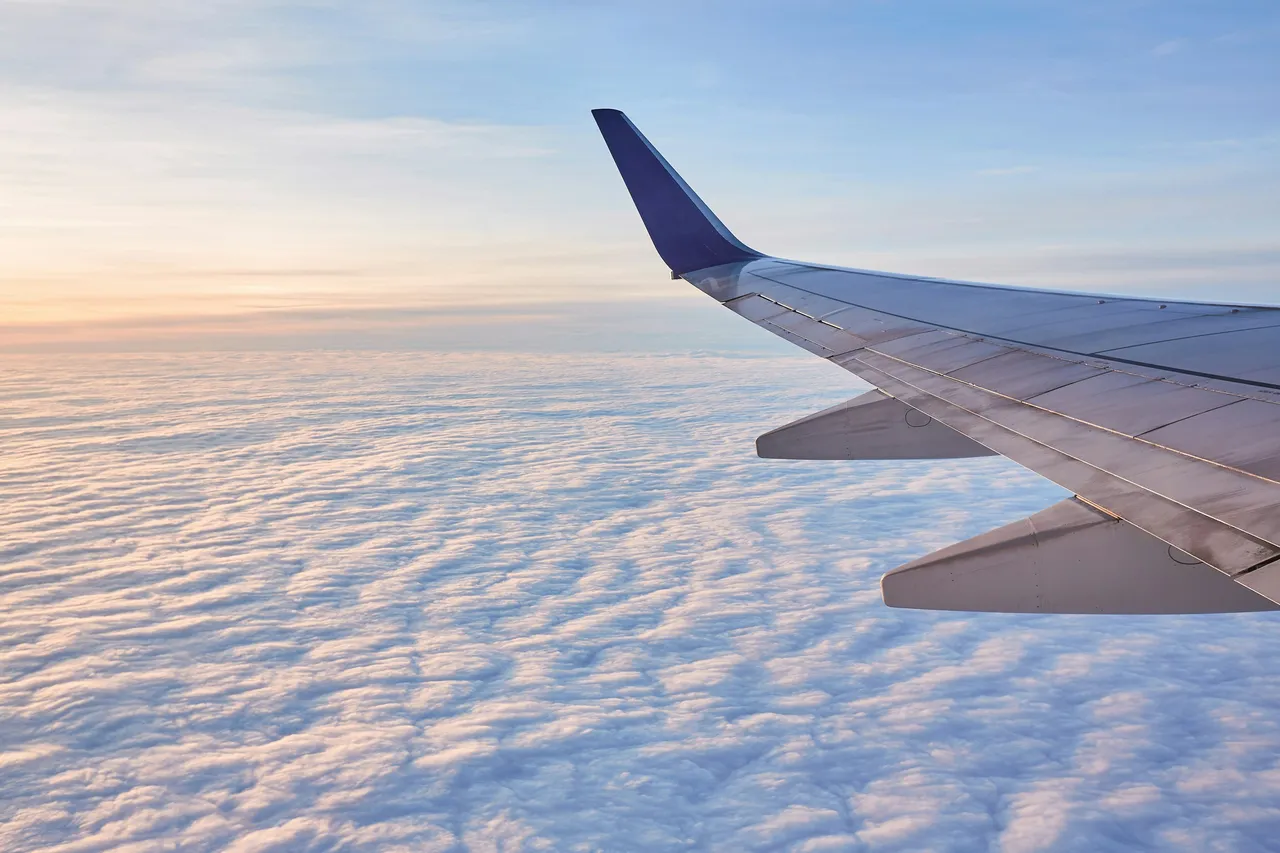
Most of the world gives flight levels in hundreds of feet, but China and Mongolia assign them in metres[5]. Air traffic control then clears a level in metres, and a crew with an altimeter in feet holds the height that the allocation table pairs with that level. The table rounds its conversions so that levels stay 1,000 ft apart[5].
Russia also flew in metres, then switched to feet above the transition altitude on 17 November 2011[5]. From February 2017 Russia began using feet below the transition level too[5].
The converter calculates exactly, so 10.7 km shows as 35,104.99 feet. An aircraft on that Chinese level still flies at 35,100 feet, because that is how the allocation table rounds it.
How do you convert km to feet in Excel?
When the heights sit in a spreadsheet column, write the formula once next to the first value and fill it down. Excel's CONVERT function takes a number, the unit you convert from and the unit you convert to[8]. The kilometre is "km" and the foot is "ft", so for cell C2 the formula is =CONVERT(C2,"km","ft").
Without the function, divide by the length of a foot in kilometres: =C2/0.0003048. That works in any spreadsheet, Google Sheets included, and for a value of 1 it should return 3,280.84.
Convert other units to Feet
Convert Kilometers to other units
Sources
- SI Units – Length — National Institute of Standards and Technology
- Ben Nevis — Wikipedia
- Mount Kosciuszko — Wikipedia
- Mount Everest — Wikipedia
- Flight level — Wikipedia
- International Standard Atmosphere — Wikipedia
- Kármán line — Wikipedia
- CONVERT function — Microsoft
Every figure in the tables was computed from the unit definitions and checked arithmetically before publication. Historical values and the names of local units come from the sources listed above.
Content last reviewed: · written and checked by the Arteon team
Frequently asked questions about converting km to feet
Why does the result have only two decimal places?
A hundredth of a foot is about three millimetres, and for heights and distances in kilometres more digits change nothing. A kilometre therefore shows as 3,280.84 feet.
How do I show the result in feet and inches?
Inches make little sense next to kilometres, since an inch is 2.54 centimetres. Shorter lengths in feet and inches come from the cm to feet converter.
Can km/h be converted to feet?
No. A kilometre per hour is a speed and a foot is a length. A speed in km/h becomes feet per second when you divide it by 1.09728, so 100 km/h is 91.13 feet per second.
How many feet are in a mile?
A statute mile has 5,280 feet, which is 1.609344 km. The miles to feet converter handles miles directly and also offers the nautical mile.
Is a 10K race 10,000 feet?
No. A 10K is 10 kilometres, which is 32,808.4 feet, more than three times as far as 10,000 feet.
Help us improve the tools
Write to us if you would like another mountain in the table or have a question about converting heights from kilometres to feet. We read every message and keep the pages up to date.