Convert milligrams to ounces
Enter a mass in milligrams and read the answer in ounces. An avoirdupois ounce weighs 28,349.523125 milligrams, so 200 mg comes to 0.0070548 ounces, which is exactly one metric carat. The card under the fields switches the converter to the troy ounce used for gold and silver.
What is a milligram and what is an ounce?
A milligram is one thousandth of a gram. The prefix milli in the SI always means a division by a thousand, so one gram holds 1,000 milligrams and one kilogram holds a million.
Milligrams are used for small masses: a vitamin dose, the caffeine in a drink, a stone in its setting, a weighed-out reagent.
An ounce describes masses tens of thousands of times larger. The avoirdupois ounce is one sixteenth of the international pound, which weighs exactly 0.45359237 kilograms[1], or 28,349.523125 milligrams[2].
That is why converting milligrams tends to give a number with several zeros after the decimal point. A dose printed on a label as a round number of milligrams drops to thousandths once it is expressed in ounces.
Alongside the avoirdupois ounce sits the troy ounce at 31,103.4768 milligrams[2]. You pick it in the card under the converter fields when you are weighing a precious metal.
How many ounces is 200 milligrams?
Two hundred milligrams comes to 0.0070548 avoirdupois ounces. To convert milligrams to ounces, divide your value by 28,349.523125.
A metric carat weighs exactly 200 milligrams[3]. A one-carat stone is therefore also 0.0070548 avoirdupois ounces, and a half-carat stone 0.0035274 ounces.
A few other doses fall in the same range. Five hundred milligrams is 0.017637 ounces. One thousand milligrams, which is a gram exactly, gives 0.035274 ounces.
With the troy ounce the same doses give results 8.85 percent smaller, because that ounce is heavier.
Formula: ounces = milligrams ÷ 28,349.523125
The divisor is exact, because the international pound has a fixed mass and the ounce is one sixteenth of it. The answer carries seven decimal places so that a single milligram does not round down to zero.
For the troy ounce the divisor is 31,103.4768, so the same 200 milligrams gives 0.0064301 troy ounces.
Formula and worked example: how many ounces is 500 mg?
The formula is a single operation: ounces = milligrams ÷ 28,349.523125.
Take the 500 milligrams printed on a supplement label. Dividing by 28,349.523125 gives 0.017637 avoirdupois ounces.
In your head it is easier to step through grams. Divide the milligrams by a thousand, then divide that result by 28.35. For 500 milligrams the first step gives 0.5 grams and the second about 0.0176 ounces.
In a spreadsheet a single function does the whole sum. In Excel, the formula =CONVERT(500,"mg","ozm") does the same sum[4]. The mass ounce carries the code ozm in this function, because oz on its own is not one of its mass units. Google Sheets uses the same name, and the mass ounce carries the same code ozm there[5].
The other direction is handled by the ounces to milligrams converter. To stay in metric units, move on to the milligrams to grams converter or the grams to ounces converter.
How many ounces is a given number of milligrams?
| Milligrams | Avoirdupois ounce (oz) | Troy ounce (oz t) | Grams (g) |
|---|---|---|---|
| 1 mg | 0.0000353 oz | 0.0000322 oz t | 0.001 g |
| 2 mg | 0.0000705 oz | 0.0000643 oz t | 0.002 g |
| 5 mg | 0.0001764 oz | 0.0001608 oz t | 0.005 g |
| 10 mg | 0.0003527 oz | 0.0003215 oz t | 0.01 g |
| 14 mg | 0.0004938 oz | 0.0004501 oz t | 0.014 g |
| 20 mg | 0.0007055 oz | 0.000643 oz t | 0.02 g |
| 25 mg | 0.0008818 oz | 0.0008038 oz t | 0.025 g |
| 30 mg | 0.0010582 oz | 0.0009645 oz t | 0.03 g |
| 40 mg | 0.001411 oz | 0.001286 oz t | 0.04 g |
| 45 mg | 0.0015873 oz | 0.0014468 oz t | 0.045 g |
| 50 mg | 0.0017637 oz | 0.0016075 oz t | 0.05 g |
| 55 mg | 0.0019401 oz | 0.0017683 oz t | 0.055 g |
| 60 mg | 0.0021164 oz | 0.001929 oz t | 0.06 g |
| 75 mg | 0.0026455 oz | 0.0024113 oz t | 0.075 g |
| 80 mg | 0.0028219 oz | 0.0025721 oz t | 0.08 g |
| 90 mg | 0.0031747 oz | 0.0028936 oz t | 0.09 g |
| 100 mg | 0.0035274 oz | 0.0032151 oz t | 0.1 g |
| 125 mg | 0.0044092 oz | 0.0040188 oz t | 0.125 g |
| 150 mg | 0.0052911 oz | 0.0048226 oz t | 0.15 g |
| 200 mg | 0.0070548 oz | 0.0064301 oz t | 0.2 g |
| 250 mg | 0.0088185 oz | 0.0080377 oz t | 0.25 g |
| 300 mg | 0.0105822 oz | 0.0096452 oz t | 0.3 g |
| 350 mg | 0.0123459 oz | 0.0112528 oz t | 0.35 g |
| 375 mg | 0.0132277 oz | 0.0120565 oz t | 0.375 g |
| 400 mg | 0.0141096 oz | 0.0128603 oz t | 0.4 g |
| 450 mg | 0.0158733 oz | 0.0144678 oz t | 0.45 g |
| 480 mg | 0.0169315 oz | 0.0154324 oz t | 0.48 g |
| 490 mg | 0.0172842 oz | 0.0157539 oz t | 0.49 g |
| 500 mg | 0.017637 oz | 0.0160754 oz t | 0.5 g |
| 550 mg | 0.0194007 oz | 0.0176829 oz t | 0.55 g |
| 600 mg | 0.0211644 oz | 0.0192904 oz t | 0.6 g |
| 650 mg | 0.0229281 oz | 0.020898 oz t | 0.65 g |
| 700 mg | 0.0246918 oz | 0.0225055 oz t | 0.7 g |
| 750 mg | 0.0264555 oz | 0.0241131 oz t | 0.75 g |
| 800 mg | 0.0282192 oz | 0.0257206 oz t | 0.8 g |
| 850 mg | 0.0299829 oz | 0.0273281 oz t | 0.85 g |
| 900 mg | 0.0317466 oz | 0.0289357 oz t | 0.9 g |
| 1,000 mg | 0.035274 oz | 0.0321507 oz t | 1 g |
| 1,200 mg | 0.0423288 oz | 0.0385809 oz t | 1.2 g |
| 1,250 mg | 0.0440925 oz | 0.0401884 oz t | 1.25 g |
| 1,500 mg | 0.0529109 oz | 0.0482261 oz t | 1.5 g |
| 2,000 mg | 0.0705479 oz | 0.0643015 oz t | 2 g |
| 2,300 mg | 0.0811301 oz | 0.0739467 oz t | 2.3 g |
| 2,500 mg | 0.0881849 oz | 0.0803769 oz t | 2.5 g |
| 3,000 mg | 0.1058219 oz | 0.0964522 oz t | 3 g |
| 4,700 mg | 0.1657876 oz | 0.1511085 oz t | 4.7 g |
| 5,000 mg | 0.1763698 oz | 0.1607537 oz t | 5 g |
| 7,500 mg | 0.2645547 oz | 0.2411306 oz t | 7.5 g |
| 10,000 mg | 0.3527396 oz | 0.3215075 oz t | 10 g |
| 15,000 mg | 0.5291094 oz | 0.4822612 oz t | 15 g |
| 20,000 mg | 0.7054792 oz | 0.6430149 oz t | 20 g |
| 28,350 mg | 1.0000168 oz | 0.9114737 oz t | 28.35 g |
| 50,000 mg | 1.7636981 oz | 1.6075373 oz t | 50 g |
| 100,000 mg | 3.5273962 oz | 3.2150747 oz t | 100 g |
What milligram figures appear on an American label?
| Nutrient | Milligrams (mg) | Ounces (oz) | Grams (g) |
|---|---|---|---|
| Potassium | 4,700 mg | 0.1657876 oz | 4.7 g |
| Sodium | 2,300 mg | 0.0811301 oz | 2.3 g |
| Calcium | 1,300 mg | 0.0458562 oz | 1.3 g |
| Magnesium | 420 mg | 0.0148151 oz | 0.42 g |
| Vitamin C | 90 mg | 0.0031747 oz | 0.09 g |
| Iron | 18 mg | 0.0006349 oz | 0.018 g |
| Zinc | 11 mg | 0.000388 oz | 0.011 g |
What do gemstone masses in carats weigh?
| Stone mass | Milligrams (mg) | Avoirdupois ounce (oz) | Troy ounce (oz t) |
|---|---|---|---|
| One point, or 0.01 carat | 2 mg | 0.0000705 oz | 0.0000643 oz t |
| Ten points, or 0.1 carat | 20 mg | 0.0007055 oz | 0.000643 oz t |
| Quarter carat | 50 mg | 0.0017637 oz | 0.0016075 oz t |
| Half carat | 100 mg | 0.0035274 oz | 0.0032151 oz t |
| One carat | 200 mg | 0.0070548 oz | 0.0064301 oz t |
| Two carats | 400 mg | 0.0141096 oz | 0.0128603 oz t |
| Five carats | 1,000 mg | 0.035274 oz | 0.0321507 oz t |
Which number formats does this converter handle?
| What you type | What the converter shows | How we read it |
|---|---|---|
| 500.5 | 0.0176546 oz | The decimal point from the numeric keypad, written the way English writes it |
| 500,5 | 0.0176546 oz | A comma pasted from a market that writes decimals that way is read as a decimal point, so the result is the same |
| 1,500 | 0.0529109 oz | Three digits follow the comma, so we read it as a thousands separator: the field holds one thousand five hundred. A note under the field shows the other possible reading, 1.5. |
| 1 000 | 0.035274 oz | A space between thousands, the way a spreadsheet pastes it, does not split the number in two |
| 3/4 | 0.0000265 oz | We work the fraction out ourselves, so there is no need to turn it into a decimal first |
| 250½ | 0.0088361 oz | The ½ character copied from a recipe or a label is added to the number in front of it |
| 500.5 mg | 0.0176546 oz | A unit symbol pasted along with the number is no trouble: we take the number and leave the symbol out |
How do you convert a dose from a supplement label?
A label gives the amount of a nutrient in milligrams per serving. Four steps turn that into ounces.
Type the number from the label
The field takes whole numbers and decimals written the English way, so you enter 200 or 12.5 directly.Leave the avoirdupois ounce selected
Food and supplements are weighed in avoirdupois ounces, so the card under the fields stays on Avoirdupois (oz). You pick Troy (oz t) for precious metals.Read the answer to seven places
Two hundred milligrams gives 0.0070548 ounces. Those seven decimal places are there so that a single milligram does not come out as zero. The Copy result button puts the number on the clipboard.Swap the direction for a value in ounces
The Swap order button opens the ounces to milligrams converter, where you enter a mass given in ounces.
When do you use the troy ounce?
Gold, silver, platinum and palladium are weighed in troy ounces. It weighs 31,103.4768 milligrams, which is 2,753.95 milligrams more than an avoirdupois ounce[2].
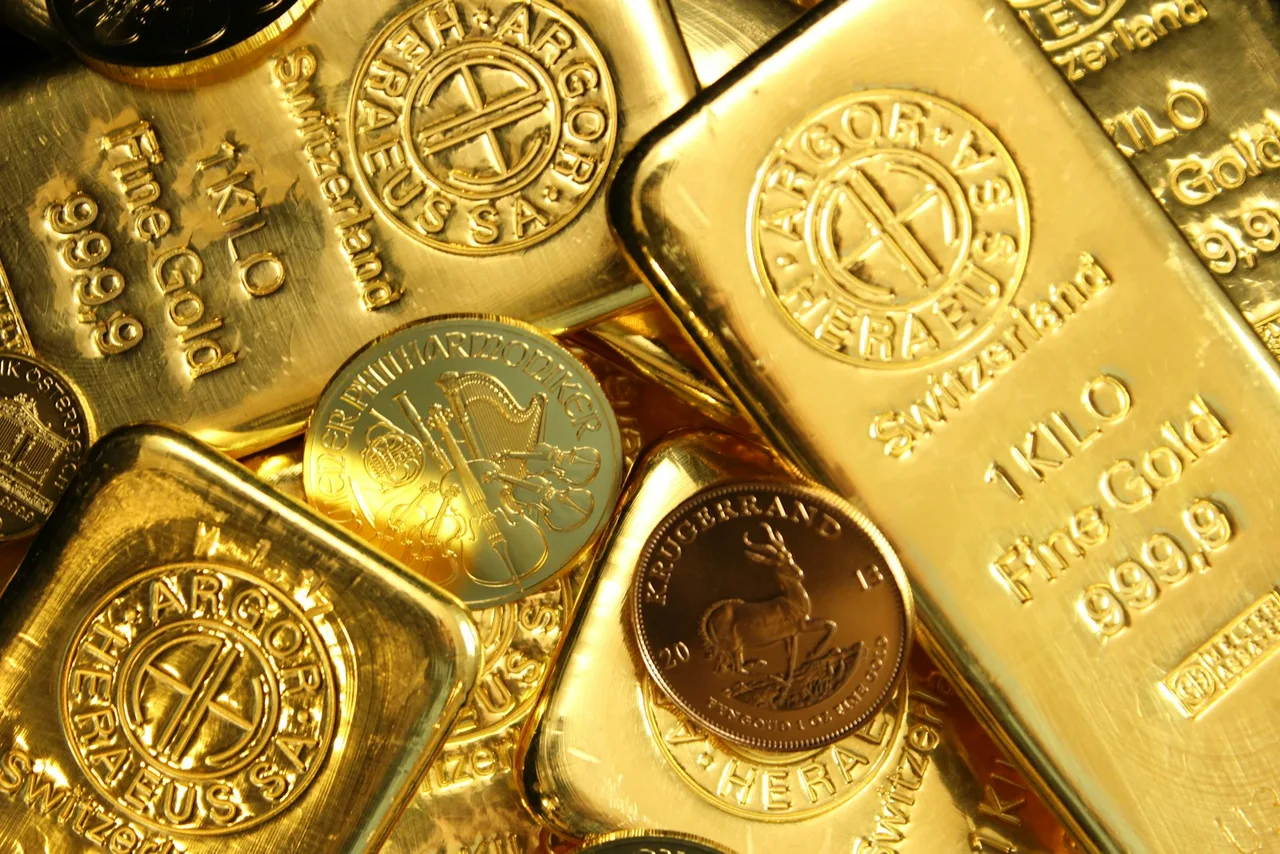
The Krugerrand in the photograph below holds one troy ounce of gold, while the bars beside it are marked 1 KILO, which is 32.151 troy ounces. A bar's mass in grams is handled by the ounces to grams converter.
The apothecaries' ounce once used in prescriptions had the same mass as the troy ounce. Drug doses are stated in milligrams today. A mass given in pounds is handled by the pounds to ounces converter.
In the card under the converter fields you pick Troy (oz t), and the answer updates as soon as you do. For 31,103.4768 milligrams you then get exactly one ounce.
Convert other units to Ounces (oz)
Convert Milligrams to other units
Sources
- NIST Guide to the SI, Appendix B.9: Conversion Factors — NIST
- Ounce — Wikipedia
- Carat (mass) — Wikipedia
- CONVERT function — Microsoft
- CONVERT — Google
- Daily Value on the Nutrition and Supplement Facts Labels — FDA
Every figure in the tables was computed from the unit definitions and checked arithmetically before publication. Historical values and the names of local units come from the sources listed above.
Content last reviewed: · written and checked by the Arteon team
Common questions about converting milligrams to ounces
How many ounces is 300 milligrams?
Three hundred milligrams comes to 0.0105822 avoirdupois ounces and 0.0096452 troy ounces, or 0.3 grams. In stone masses that is one and a half metric carats.
How many ounces is 500 milligrams?
Five hundred milligrams comes to 0.017637 avoirdupois ounces, which is half a gram. In troy ounces it gives 0.0160754.
Why does the answer carry seven decimal places?
One milligram is 0.0000353 ounces, so at four decimal places the field would show zero. Seven places keep the smallest values meaningful, and at larger masses the trailing zeros drop away anyway: 1,000 milligrams shows as 0.035274 ounces.
How many milligrams are in a carat and in a point?
A metric carat holds exactly 200 milligrams and a point, its hundredth part, exactly 2 milligrams[3]. A stone described as 0.75 carat therefore weighs 150 milligrams, or 0.0052911 avoirdupois ounces.
Why are milligrams on a food label?
The FDA sets a Daily Value for each nutrient and states many of them in milligrams[6]. Calcium appears there as 1,300 milligrams, magnesium as 420 and vitamin C as 90. The percentage on the panel is measured against those figures.
When should you pick the troy ounce?
For gold, silver, platinum and palladium. It weighs 31,103.4768 milligrams[2], which is 9.71 percent more than an avoirdupois ounce, so at one ounce the gap reaches 2,753.95 milligrams. You will find Troy (oz t) in the card under the converter fields.
How does a milligram differ from a microgram?
A microgram is one thousandth of a milligram, so one milligram holds 1,000 micrograms. The FDA writes it as mcg and uses it for vitamin D and folate[6]. The symbol µg stands for the same unit. This converter's field takes fractional values, so you enter 250 micrograms as 0.25. The micrograms to milligrams converter works out that step from 250 mcg to 0.25 mg.
Help us improve these tools
Have an idea for a feature, found a bug, or want to suggest another tool? Write to us.