Convert cubic centimetres to litres
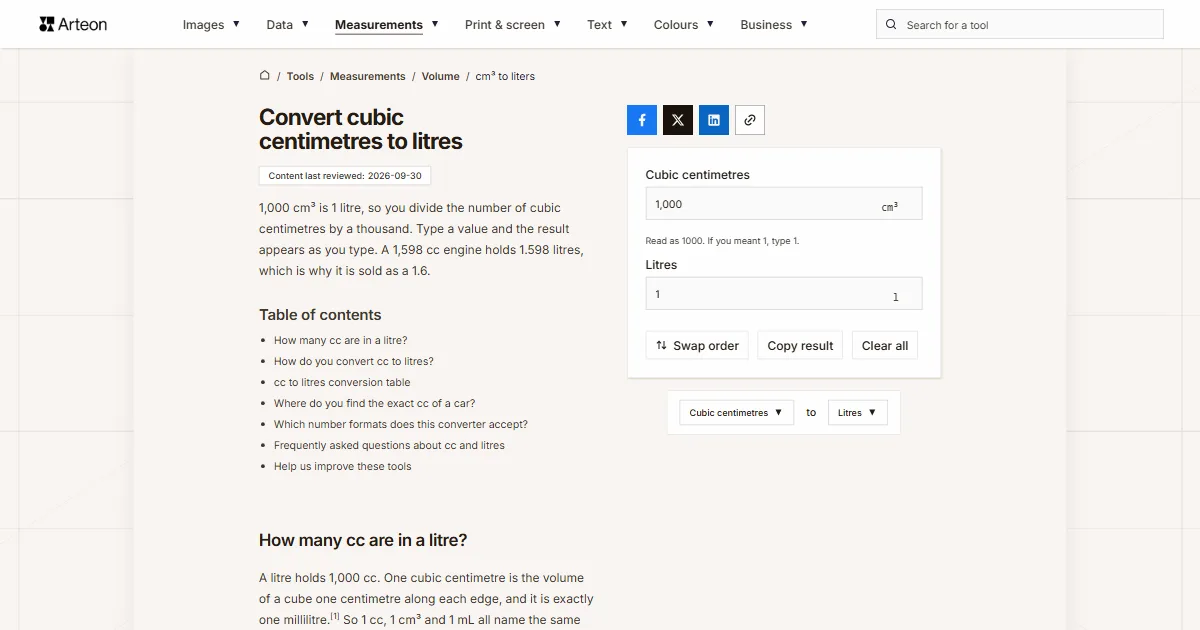
1,000 cm³ is 1 litre, so you divide the number of cubic centimetres by a thousand. Type a value and the result appears as you type. A 1,598 cc engine holds 1.598 litres, which is why it is sold as a 1.6.
How many cc are in a litre?
A litre holds 1,000 cc. One cubic centimetre is the volume of a cube one centimetre along each edge, and it is exactly one millilitre.[1] So 1 cc, 1 cm³ and 1 mL all name the same amount, and a figure in millilitres goes through the mL to liters converter with the same result.
A litre is a cube 10 cm along each edge. Ten small cubes fit along its length, ten across and ten up, which gives 10 × 10 × 10 = 1,000.
The SI symbol is cm³. The abbreviations cc and ccm sit outside the SI, yet cc is still the usual way to state the displacement of an engine.[1]
How do you convert cc to litres?
The formula is a single step: litres = cubic centimetres ÷ 1,000. Dividing by a thousand moves the decimal point three places to the left. That makes 1,598 cc equal to 1.598 litres, 125 cc equal to 0.125 litres and 50 cc equal to 0.05 litres.
Car makers and dealers usually round engine size to one decimal place in litres. So a 1,598 cc engine is badged and advertised as a 1.6, a 1,968 cc diesel as a 2.0, and a 999 cc three-cylinder as a 1.0.
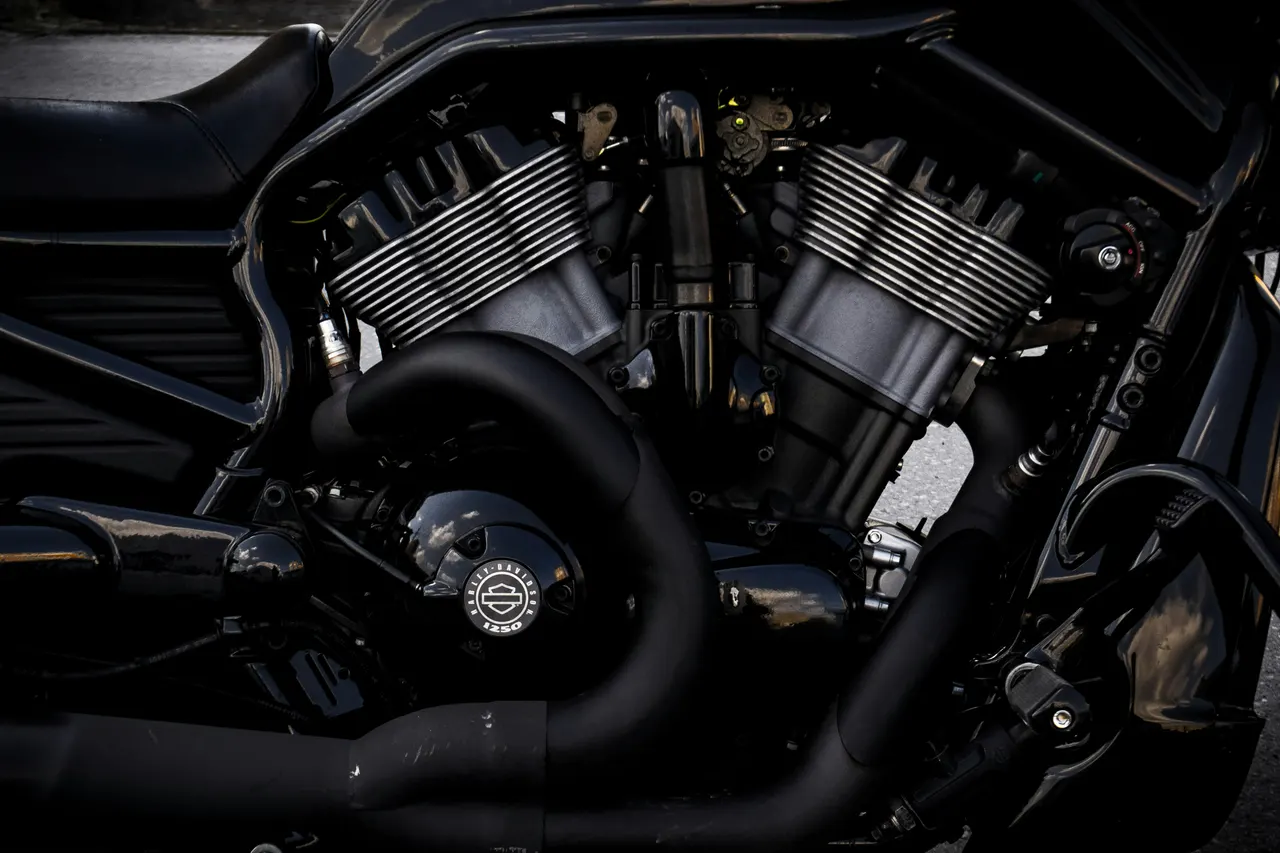
Motorcycles and scooters mostly keep the cc figure instead: a 125 or a 600 means 125 cc or 600 cc. To go the other way, from a badge in litres to an approximate cc figure, use the liters to cm³ converter.
cc to litres conversion table
| Cubic centimetres | Litres |
|---|---|
| 1 cm³ | 0.001 l |
| 10 cm³ | 0.01 l |
| 50 cm³ | 0.05 l |
| 100 cm³ | 0.1 l |
| 125 cm³ | 0.125 l |
| 250 cm³ | 0.25 l |
| 300 cm³ | 0.3 l |
| 500 cm³ | 0.5 l |
| 600 cm³ | 0.6 l |
| 750 cm³ | 0.75 l |
| 999 cm³ | 0.999 l |
| 1,000 cm³ | 1 l |
| 1,199 cm³ | 1.199 l |
| 1,248 cm³ | 1.248 l |
| 1,499 cm³ | 1.499 l |
| 1,598 cm³ | 1.598 l |
| 1,798 cm³ | 1.798 l |
| 1,968 cm³ | 1.968 l |
| 1,998 cm³ | 1.998 l |
| 2,500 cm³ | 2.5 l |
| 2,993 cm³ | 2.993 l |
| 3,500 cm³ | 3.5 l |
| 5,000 cm³ | 5 l |
Where do you find the exact cc of a car?
In the UK the V5C registration certificate, the log book, records the cylinder capacity in cc.[2] The figure there is exact, such as 1598, not the rounded 1.6 from the advert.
Typed into the field, that exact figure gives you litres to three decimal places. Rounded to one place, it should match the badge on the car, which is a quick way to check that an advert and the paperwork describe the same engine.
Which number formats does this converter accept?
| What you type | What the converter shows | How we read it |
|---|---|---|
| 1598 | 1.598 l | This is how the cylinder capacity appears on a V5C. A number with no unit is read as cubic centimetres. |
| 1,598 | 1.598 l | A comma before three digits groups thousands in English, so this is fifteen hundred and ninety-eight cc. A note under the field shows the other possible reading, 1.598 cc. |
| 1598 cc | 1.598 l | The everyday abbreviation cc is read as cubic centimetres. |
| 250cc | 0.25 l | Motorcycle adverts often write cc straight after the number with no space, and we read it the same way. |
| 1598 cm3 | 1.598 l | Spec sheets typed on a plain keyboard write cm3 with an ordinary 3. We treat the 3 as part of the symbol, not as a digit. |
| 1598 cubic centimetres | 1.598 l | The full unit name is dropped just like the symbol, in British or American spelling. |
| 1.6 L | 1.6 l | A size in litres pasted from a brochure is recognised by the L, turned into 1,600 cc and shown again as the same number of litres. |
Convert other units to Litres
Sources
- Cubic centimetre — Wikipedia
- Change vehicle details on a V5C registration certificate (log book) — GOV.UK
- List of Error-Prone Abbreviations, Symbols, and Dose Designations — Institute for Safe Medication Practices
Every figure in the tables was computed from the unit definitions and checked arithmetically before publication. Historical values and the names of local units come from the sources listed above.
Content last reviewed: · written and checked by the Arteon team
Frequently asked questions about cc and litres
Why do some hospitals no longer write cc?
Because a handwritten cc can be misread as u for units, which turns a volume into a completely different dose. The Institute for Safe Medication Practices in the US lists cc among error-prone abbreviations and recommends writing mL instead.[3] The amount stays the same, since 1 cc and 1 mL are equal.
How do I convert cc per minute to litres per minute?
Divide by 1,000, exactly as with a plain volume, because the minute is the same on both sides. A flow of 500 cc/min is 0.5 L/min. The converter handles the volume, so type the cc figure and read the result as litres per minute.
Can I convert g/cm³ to litres?
No, because g/cm³ is a unit of density, not volume. It tells you how many grams one cubic centimetre of a substance weighs. It does convert to kilograms per litre: 1 g/cm³ equals 1 kg/L, since a litre has 1,000 cm³ and a kilogram has 1,000 g.
Help us improve these tools
Spotted a mistake in a table or have an idea for this converter? Write to us.