Convert cups to liters
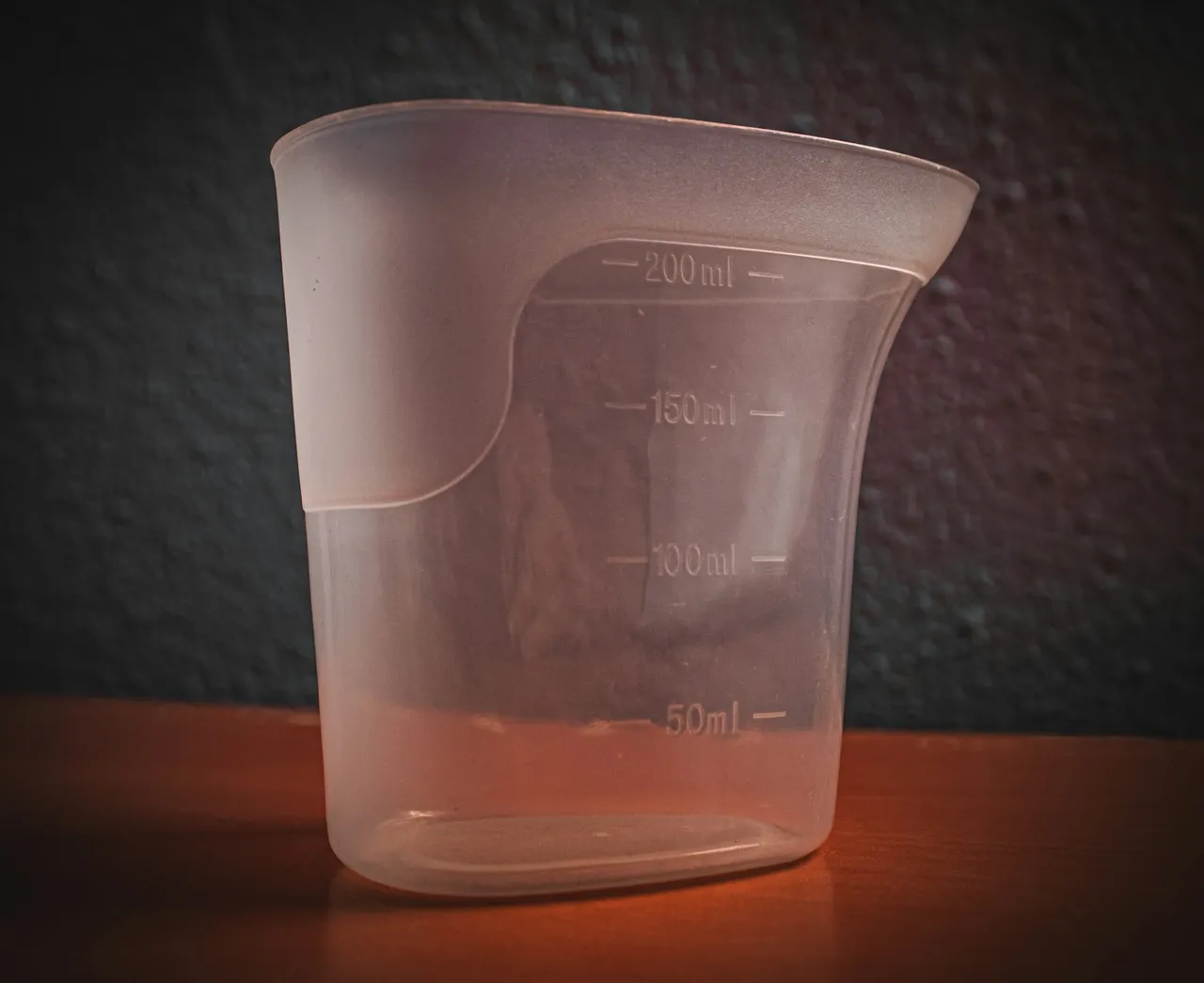
1 US cup is 0.2366 l, a little under a quarter of a litre. Type the cups from your recipe, fractions like 3/4 included, and the result in litres appears as you type. The Cup type switch also covers the US legal cup from food labels and the metric cup used in Australia, New Zealand and Canada, four of which make exactly one litre.
How many liters are in a cup?
One US customary cup holds 0.2366 litres, or 0.2365882365 l before rounding. That is a sixteenth of a US gallon, which also makes the cup half a US pint and eight US fluid ounces[1].
The cup on a Nutrition Facts panel is a round 0.24 litres, because that is how US food labelling rules define it[2]. Australia, New Zealand and Canada cook with a metric cup of 0.25 litres[1]. You pick one of the three with the Cup type switch under the fields. It starts on the US customary cup, because that is the cup American recipes and measuring sets mean.
The litre has only one size. Since 1964 it has been a special name for the cubic decimetre, a cube 10 cm on each side[3]. That is why the switch sits only next to the cups field, while the litres field always means the same thing.
How do you convert cups to liters?
Multiply the number of cups by the size of one cup in litres.
Formula: litres = cups × 0.2365882365 for the US customary cup. Use 0.24 for the US legal cup and 0.25 for the metric cup.
Three cups of stock in an American recipe come to 3 × 0.2366, which is 0.7098 litres. An Australian recipe asking for the same three cups works out at 0.75 litres, because its cup is 13.41 ml larger.
One pair of numbers is worth remembering. Four US cups make 0.9464 l, just short of a litre, while four metric cups make exactly one litre. Those 0.9464 litres are also one US liquid quart, since a quart is four cups.
American recipes write amounts as fractions, so the field takes them the same way. Type 3/4 and you get 0.1774 l. Type 1 3/4, with a space between the whole number and the fraction, and you get 0.414 l. The cups to ml converter gives the same amounts in millilitres, and the liters to cups converter works the other way round.
How many liters is each number of cups?
| Cups | US customary cup | US legal cup | Metric cup |
|---|---|---|---|
| 1/16 | 0.0148 l | 0.015 l | 0.0156 l |
| 1/8 | 0.0296 l | 0.03 l | 0.0313 l |
| 1/4 | 0.0591 l | 0.06 l | 0.0625 l |
| 1/3 | 0.0789 l | 0.08 l | 0.0833 l |
| 1/2 | 0.1183 l | 0.12 l | 0.125 l |
| 2/3 | 0.1577 l | 0.16 l | 0.1667 l |
| 3/4 | 0.1774 l | 0.18 l | 0.1875 l |
| 1 | 0.2366 l | 0.24 l | 0.25 l |
| 1 1/4 | 0.2957 l | 0.3 l | 0.3125 l |
| 1 1/2 | 0.3549 l | 0.36 l | 0.375 l |
| 1 3/4 | 0.414 l | 0.42 l | 0.4375 l |
| 2 | 0.4732 l | 0.48 l | 0.5 l |
| 2 1/2 | 0.5915 l | 0.6 l | 0.625 l |
| 3 | 0.7098 l | 0.72 l | 0.75 l |
| 4 | 0.9464 l | 0.96 l | 1 l |
| 5 | 1.1829 l | 1.2 l | 1.25 l |
| 6 | 1.4195 l | 1.44 l | 1.5 l |
| 8 | 1.8927 l | 1.92 l | 2 l |
| 10 | 2.3659 l | 2.4 l | 2.5 l |
| 12 | 2.8391 l | 2.88 l | 3 l |
| 16 | 3.7854 l | 3.84 l | 4 l |
| 20 | 4.7318 l | 4.8 l | 5 l |
| 24 | 5.6781 l | 5.76 l | 6 l |
| 32 | 7.5708 l | 7.68 l | 8 l |
| 40 | 9.4635 l | 9.6 l | 10 l |
| 48 | 11.3562 l | 11.52 l | 12 l |
| 64 | 15.1416 l | 15.36 l | 16 l |
| 100 | 23.6588 l | 24 l | 25 l |
How many liters is a 12-cup coffee maker?
| Carafe mark | Water | Brewed coffee |
|---|---|---|
| 4 cups | 0.59 l | 0.47 l |
| 6 cups | 0.89 l | 0.71 l |
| 8 cups | 1.18 l | 0.95 l |
| 10 cups | 1.48 l | 1.18 l |
| 12 cups | 1.77 l | 1.42 l |
What number formats does this converter accept?
| What you type | What the converter shows | Note |
|---|---|---|
| 1.5 | 0.3549 l | A decimal point reads the usual way in English. |
| 1,5 | 0.3549 l | A decimal comma copied from a European recipe reads as a decimal too, because only one or two digits follow it. |
| 1,500 | 354.8824 l | Three digits after the comma make it a thousands separator, so this is one thousand five hundred cups. A note under the field shows the other possible reading, 1.5. |
| 3/4 | 0.1774 l | A fraction with a slash is worked out for you, with no need to turn it into a decimal first. |
| 1 3/4 | 0.414 l | A whole number and a fraction separated by a space are added together, the way a cook reads them. |
| 1-1/2 | 0.3549 l | A hyphen between the whole number and the fraction, as some US recipes print it, reads like a space, so this is one and a half cups. |
| ½ | 0.1183 l | The ½ character copied from a recipe website counts the same as 1/2. |
| 1½ | 0.3549 l | A number with the ½ character right after it counts as one and a half. |
| 2 cups | 0.4732 l | A unit name pasted along with the number is skipped, and only the number is converted. |
Convert other units to Litres
Convert Cups to other units
Sources
- Cup (unit) — Wikipedia
- 21 CFR 101.9 — Nutrition labeling of food — Legal Information Institute, Cornell Law School
- Resolution 6 of the 12th CGPM (1964): Litre — Bureau International des Poids et Mesures
- Micom Rice Cooker & Warmer NS-TSC10/18 — Zojirushi
- Neuro Fuzzy Rice Cooker & Warmer NS-ZCC10/18 — Zojirushi
Every figure in the tables was computed from the unit definitions and checked arithmetically before publication. Historical values and the names of local units come from the sources listed above.
Content last reviewed: · written and checked by the Arteon team
Frequently asked questions about converting cups to liters
How many liters is a 10-cup rice cooker?
Usually 1.8 litres. Zojirushi, for example, counts capacity with the 180 ml rice cup that comes in the box, filled with uncooked rice[4], and sells its two common sizes as 5.5 cups or 1.0 litre and 10 cups or 1.8 litres[5]. The converter works with measuring cups, so it gives 2.3659 l for 10 US cups, which does not describe the cooker.
Is there a UK cup?
No culinary cup was ever set in imperial units, and British recipes today give volumes in millilitres or fluid ounces[1]. The 0.284 l figure some sites list as a UK cup is half an imperial pint, which the pints to liters converter handles.
How many liters is a cup of flour?
The same 0.2366 litres as a cup of water, because a cup measures space, not weight. What changes is the mass: a cup of flour weighs far less than a cup of water. If the recipe also gives grams, a kitchen scale will be more repeatable.
Why does the result show four decimal places?
So that small amounts do not turn into zero. A US teaspoon is 1/48 of a cup, or 0.0049 l, and with two decimal places the field would show 0 l. The Copy result button copies the number exactly as it appears in the field.
A question or a suggestion?
Have an idea for a feature, found a bug or want to suggest another tool? Write to us.